

You need a rod holder that lets you get to your rod easily, and won’t hinder you moving about the boat.
Yet a holder that looks right in a catalog can create a difficult retrofit if it needs more deck depth than expected or clamps to the wrong rail. The main choice is between a clamp-on fishing rod holder attached to existing tubing and a flush-mount rod holder set into a suitable gunwale or deck surface. This guide compares their installation demands, fishing positions and ordering details so boat owners, installers and marine hardware buyers can select a workable design.
How Do Clamp-on And Flush-mount Rod Holders Compare?
Both support fishing rods, but they pass loads to different parts of the boat. The mounting setup counts just as much as the stainless steel fitting.
What Does a Clamp-On Fishing Rod Holder Attach To?
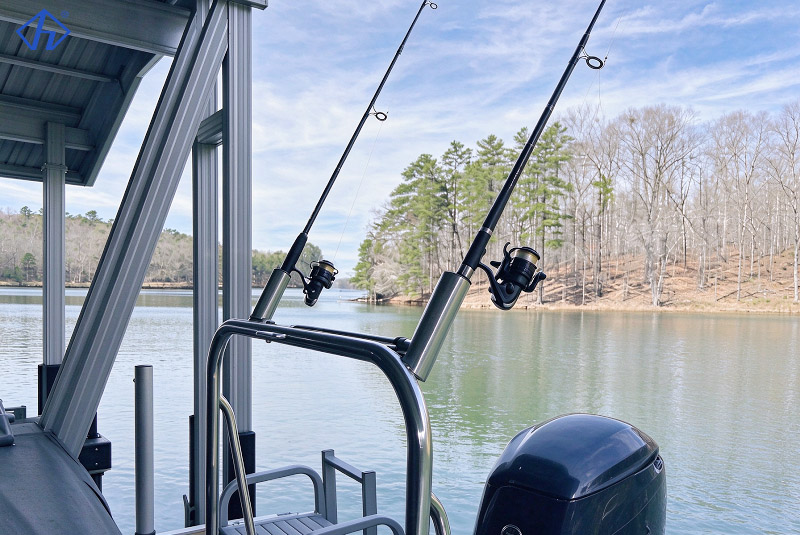
A clamp-on design fastens around an existing boat rail or suitable tube. It avoids cutting a large opening in the deck and may allow the holder to be moved later. Some designs can rotate or tilt, but the available adjustment depends on the specific model. Check the actual rail outside diameter and clamp geometry before ordering; a holder sold as “rail mount” is not automatically compatible with every railing.
HIEVER lists adjustable and rotating stainless steel clamp-on fishing rod holders in its fishing hardware range. The correct configuration still needs to be matched to the boat’s rail and fishing position.
How Is a Flush-Mount Rod Holder Installed?
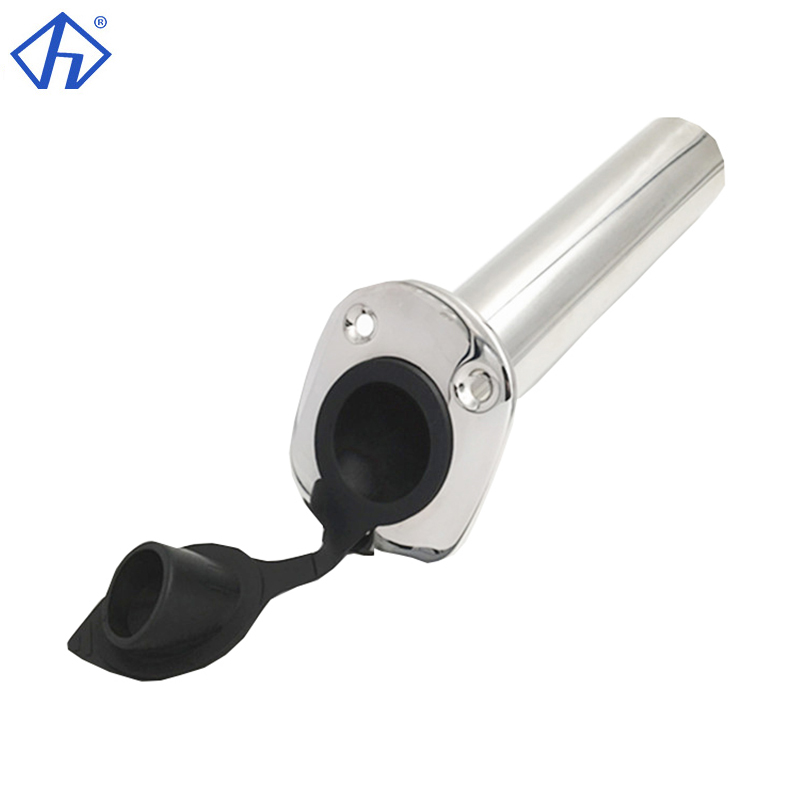
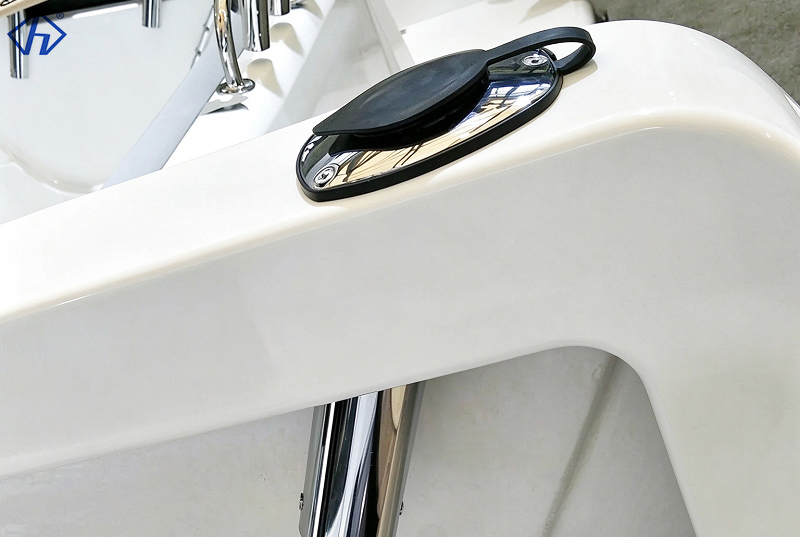
A flush-mount design passes through a prepared opening, leaving the mounting flange close to the gunwale surface. This can keep the deck edge less cluttered, but the installer needs access beneath the fitting for its tube, fasteners and any drain connection. A cored deck also needs appropriate treatment of the exposed core to prevent water entry.
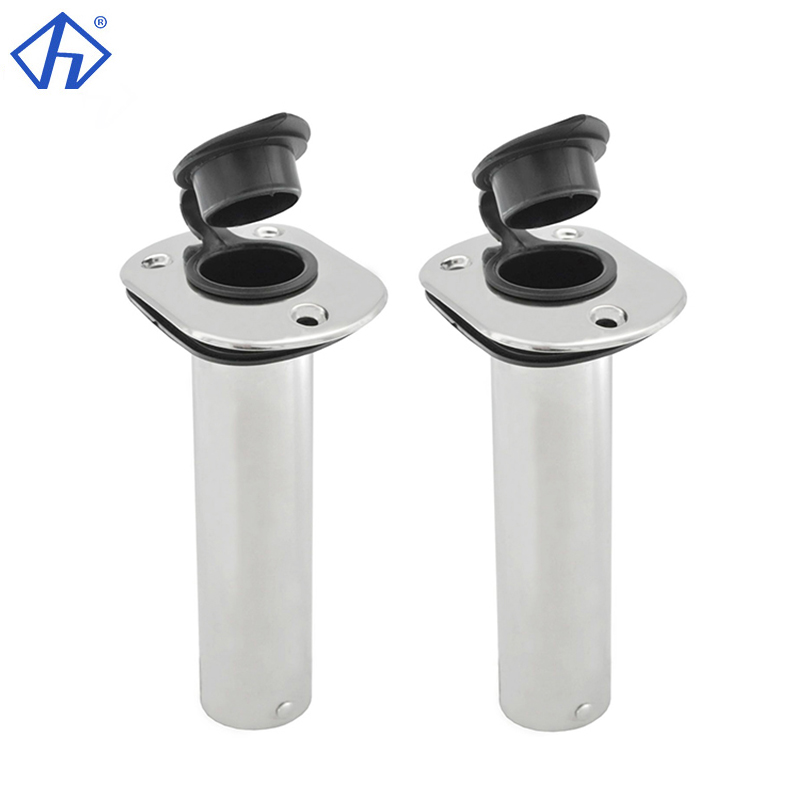
For example, HIEVER’s 316 stainless steel flush-mount rod holder with rubber cap is listed at 260 × 40 mm with 0°, 15°, 30° and 55° angle options. These are product options, not universal dimensions for every flush-mount fitting.
Which Mounting Style Fits Your Available Space?
A quick measurement of the boat will eliminate unsuitable products before price or finish becomes part of the discussion.
What Should You Measure for a Rail Installation?
Measure the rail’s outside diameter, usable straight length and distance from stanchions, corners and handholds. Check whether the clamp could block a walkway or strike a seat when a rod is inserted. Thin, loose or decorative tubing may not be an appropriate support for fishing loads. The rail and all connected fittings have to be evaluated together. A sturdy‑looking clamp alone doesn’t guarantee a safe install
What Should You Inspect Before Cutting a Deck Opening?
For flush mounting, confirm the flange footprint, cutout size, under-deck depth and tool access around every fastener. Look for wiring, hoses, structure and existing hardware behind the proposed location. If the fitting has a drain, plan a suitable discharge route instead of allowing water to collect in a closed compartment. Use a template and verify the actual supplied part before drilling.
How Do Fishing Style and Rod Angle Affect Selection?
A boat used for casual inshore fishing may need a different holder position from one used for trolling or managing several rods at once. Don’t only look at the holder. Check where the line runs and the space the rod needs.
When Should You Go with an Adjustable Clamp-on Holder?
These removable, adjustable holders suit boats with changing fishing arrangements, or cases where permanent deck changes aren’t wanted. However, an adjustable joint introduces another connection to inspect. Confirm that its locking mechanism holds the selected angle under the intended working conditions, and check that the rod can be removed without hitting nearby equipment.
When Does a Fixed Flush-Mount Position Work?
A flush-mount holder can provide a consistent position along a fishing gunwale. Its fixed location is useful when the boat’s fishing arrangement is already established and the builder has provided suitable support beneath the mount. Compare the listed tube angle with the intended line path and nearby holders. A steeper angle is not automatically better: clearance, rod length and how the boat is actually fished determine the fit.
What material and fit things to check before ordering?
Boat parts exposed to the elements need corrosion protection. A shiny polish doesn’t guarantee the rod butt, clamp or fasteners fit as they should.
Is 316 Stainless Steel Enough to Make Sure It’s Suitable?
316 stainless is popular for chloride-exposed marine fishing rod hardware, HIEVER specifies this material on its clamp-on and flush-mount models. Even with 316 stainless steel, remove salt deposits and inspect sheltered joints, fasteners and any cap. Buyers should ask for the material grade and finish rather than inferring either from product photographs.
Which Measurements Belong in a Purchase Inquiry?
State the rod butt diameter, preferred tube angle, number and spacing of holders, installation surface, and expected fishing use. For rail versions, add the rail outside diameter and tube shape. For flush versions, provide the mounting thickness, available depth, cutout and drainage requirements. Ask for a dimensioned drawing and confirm the mounting kit and liner or cap supplied with the exact model.
How Can HIEVER Support a Rod Holder Purchase?
Supplier communication is most useful when the buyer sends the actual installation details instead of asking for a generic “boat rod holder.”
What Should Distributors and Boatbuilders Confirm?
Yantai Hiever Metalworks Co., Ltd. lists clamp-on, rotating and flush-mount fishing rod hardware in its marine product range. It also states that OEM and ODM orders can be discussed from customer drawings or physical samples. Buyers can compare the published holder options with their rail or gunwale geometry, then request drawings, material confirmation, sample approval and packaging requirements before committing to a production quantity.
Conclusion
Choose a clamp-on fishing rod holder when the boat has an appropriate rail and installation flexibility matters. Consider a flush-mount rod holder when the gunwale provides adequate structure and below-deck clearance for a planned, permanent position. Neither style should be chosen from appearance alone. Double-check connection sizes, load route, rod angle, drainage, salt exposure and room for maintenance against your real boat before ordering.
FAQs
Is It Possible to Mount a Clamp-on Rod Holder With No Deck Cutting?
Usually yes. A proper clamp-on holder clips onto the existing rail, though the rail must have correct dimensions and strong support. Some designs may still need assembly fasteners or other adjustments.
Does a Flush-Mount Rod Holder Always Need a Drain?
Not every product uses the same drainage arrangement. Check the model’s installation instructions, expected water exposure and location beneath the deck; do not assume a rubber cap alone makes the installation watertight.
Should I Choose a Rod Holder by Its Listed Tube Angle Alone?
No. The angle must work with the fishing method, rod length, nearby equipment and mounting geometry. Confirm the final installed orientation and rod-butt fit with the specific product.



Leave a comments