

An anchor swivel connector is intended to help an anchor and chain align during deployment and retrieval. If the assembly catches at the bow roller, however, the problem may involve the connector’s outer shape, chain alignment, roller geometry or the way the anchor approaches the bow. Replacing the swivel with another part of the same advertised chain size may not solve the snag. This guide explains the checks boat owners, installers and marine hardware buyers can make before changing a connector or modifying an anchoring setup.
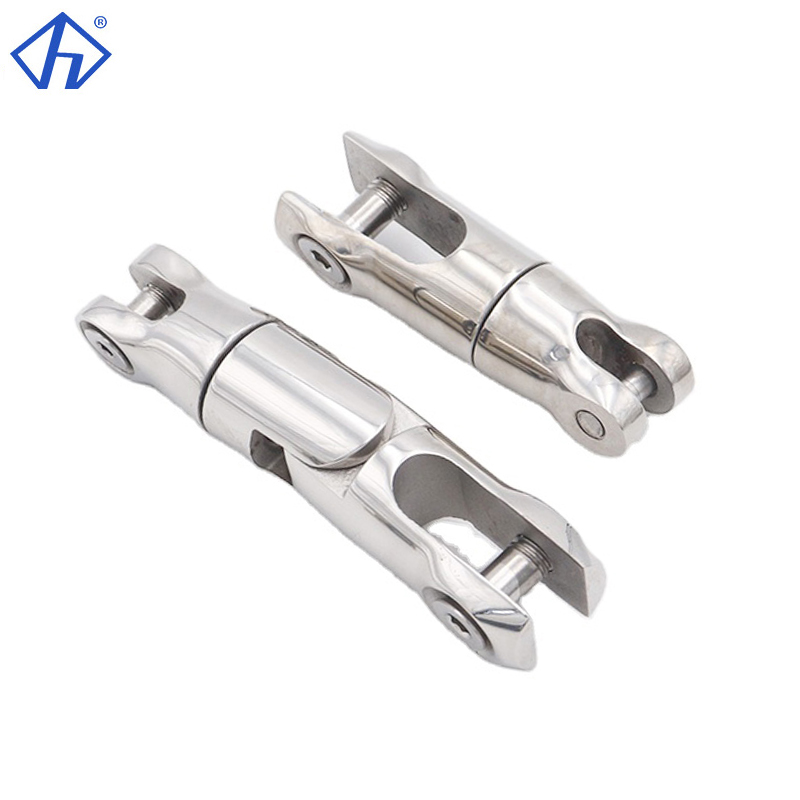
Where Does an Anchor Swivel Usually Catch?
Observe where resistance starts rather than assuming the rotating joint has failed. The point of contact gives a useful clue about which dimensions need checking.
Can the Connector Body Hit the Bow Roller?
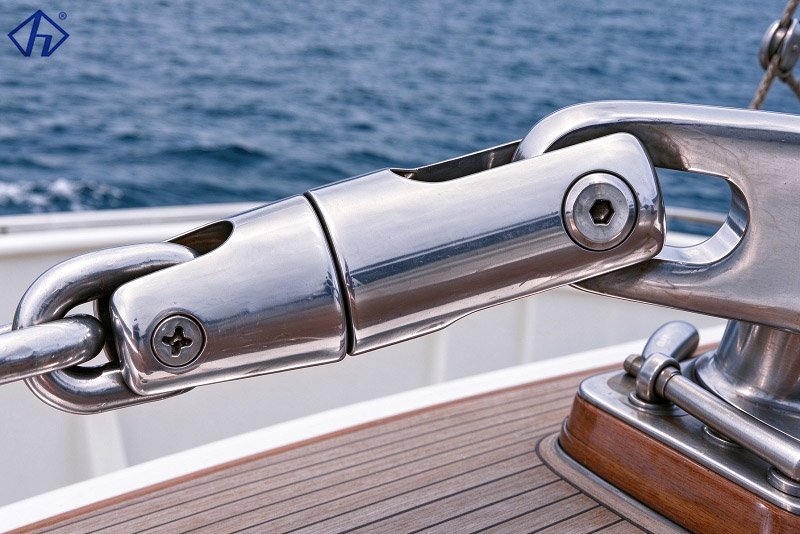
The swivel body can be wider or longer than the chain links it joins. As it reaches the roller, a broad shoulder or projecting pin head may contact the cheeks, roller groove or nearby guide. A fitting that moves freely while hanging below the bow can still jam as the chain changes direction over the roller. Measure the narrowest passage through the entire retrieval path, not just the roller groove at its center.
Can the Anchor Arrive at the Wrong Angle?
The anchor shank, connector and final chain links must pass through a changing angle as the anchor approaches the bow. If a joint reaches its travel limit at that point, the assembly may wedge or lift off the roller. Run the movement slowly in a safe space, keep hands clear of pinch areas. If the connector looks bent or damaged, stop operation right away. Don’t reuse until the full anchoring assembly is inspected.
How Should Chain Size and Connector Clearance Be Checked?
A nominal chain size is only the start of compatibility checking. Buyers need the geometry of both the chain end and the connector.
Does “6–8 mm” Confirm a Correct Fit?
No. It is a marketed size range, not a substitute for matching the actual chain profile, link dimensions and pin engagement. HIEVER lists a double swivel anchor connector for 6–8 mm and 10–12 mm chain with a double-pivot joint and AISI 316 cast stainless steel construction. Confirm which size variant is being quoted and request dimensions for its end openings, pins, overall width and length.
Also confirm the chain type and link geometry. Two chains described by the same nominal diameter can have different link lengths or widths. The connection must permit the required articulation without side-loading a pin or trapping a link.
Which Bow Roller Dimensions Are Relevant?
Measure the roller groove, side-cheek spacing and the clearance beneath any retaining bar or bail. Check the distance from the roller to the anchor stop and the point where the chain changes direction toward the windlass. Compare these measurements with the complete connector profile at the angles it actually assumes in motion. Photographing a trial fit from the side and above can reveal where the interference begins.
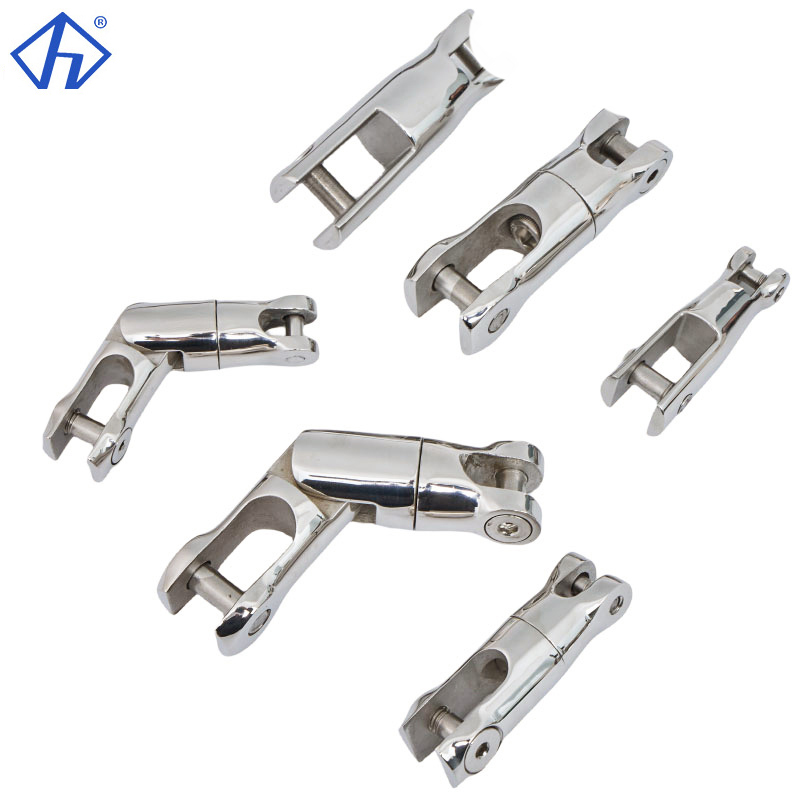
Can a Double-Pivot Swivel Prevent Snagging?
A joint that can articulate in more than one direction may help the connector negotiate a bend, but more movement is not a guarantee of compatibility with the vessel’s bow arrangement.
When Might Extra Articulation Help?
A double-pivot design can give the connector additional freedom as the chain and anchor shank change direction. HIEVER’s double-pivot swivel chain connector is marketed for smoother passage over anchor rollers and reduced chain twist. Its benefit in a particular installation still depends on body dimensions, joint travel and clearances. A longer articulated connector may also occupy more space near the bow stop, so test the complete assembly before assuming that more joints will solve a jam.
What Else Can Cause a Swivel to Bind?
A seized or contaminated pivot, damaged pin, uneven wear or excessive sideways pull can limit movement even when the dimensions were originally correct. Salt and dirt collect on tight mating surfaces. Look the connector over for cracks, bends, rust and loose parts. Use the maker’s maintenance and replacement instructions. Never grind load-bearing connectors to fit the roller.
What Should Be Verified Before Replacing the Connector?
The anchor, chain, swivel, bow roller and windlass operate as a connected system. A replacement decision should account for all of them.
How Do You Confirm the Required Strength?
Request the connector manufacturer’s applicable working load limit, minimum breaking strength, test documentation and permitted use, then check these against the complete anchoring system and vessel requirements. The advertised 6–8 mm or 10–12 mm fit does not establish a safe working load. The grade of stainless steel also does not replace strength verification. Check what orientation the connector should be fitted in, and see if we need any shackle, pin or extra link.
What Should a Boatbuilder Include in the RFQ?
Provide the chain standard and actual link measurements; anchor model and shank thickness; bow roller groove and side clearance; available room to the anchor stop; desired connector orientation; required strength documentation; and operating environment. A short video of the current snag can be more informative than a catalog photograph. Buyers sourcing related anchor and deck hardware should request a sample for an installed fit check before volume orders.
How Can HIEVER Support Anchor Connector Sourcing?
Supplier specifications should distinguish documented product features from the performance that still needs to be confirmed on the boat.
What Is Available in HIEVER’s Product Range?
Yantai Hiever Metalworks Co., Ltd. lists stainless steel marine anchoring accessories, including single- and double-swivel connector designs. Its double-joint product page identifies AISI 316 casting, a mirror finish and 6–8 mm / 10–12 mm variants. Boatbuilders and distributors can send drawings or samples to discuss dimensional compatibility and request the strength and inspection documents relevant to their project. Never substitute the supplier’s general product description for validation of the finished installation.Yantai Hiever is the professional supplier of marine and industrial stainless hardwares more than 20 years,do not hesitate to send your inquiry to our energetic team.
Conclusion
An anchor swivel that jams at the bow roller is often a system-fit problem rather than a reason to change one part immediately. Check the exact contact point, chain link geometry, connector width, joint travel and anchor approach angle. Compare the full assembly with the bow roller and windlass path, and verify load ratings separately from chain-size labels. A controlled sample fit can reveal a mismatch before it becomes an expensive or hazardous problem on the water.
FAQs
Will a Larger Anchor Swivel Stop Jamming?
Not necessarily. A larger connector may have more body width and create even less clearance. Check the chain connection and the full bow roller path before selecting a different size.
Does a Double Swivel Eliminate Anchor Chain Twist?
It may reduce twisting in a compatible assembly, but it cannot compensate for incorrect chain routing, restricted articulation or a poor anchor approach angle. Inspect the whole retrieval system.
Is AISI 316 Enough to Verify an Anchor Connector’s Load Capacity?
No. AISI 316 identifies the material family, not the connector’s tested load capacity. Request strength data and the manufacturer’s usage instructions for the specific size and construction.



Leave a comments