

Essential components for safe, efficient mooring on all types of vessels including yachts, docks and commercial vessels in harbor, Rotating Boat Cleats offer superior rope handling and reduced wear while spreading the load effectively. Unlike Fixed Cleats these Cleats are designed for use in dynamic marine environments.
Demand for high quality marine accessories that can meet high performance criteria is increasing globally. Not only do buyers want items that look good but also they place a lot of emphasis on the quality of the production, the materials used and how well an item resists corrosion over time. The production of rotating boat cleats therefore is a critical factor that determines the quality of such an item.
Premium marine hardware is primarily made from 316 stainless steel, a Marine Grade alloy, which has superior resistance to corrosion from seawater, mechanicalare and environmental degradation over long periods. Combined with precision engineering techniques such as investment casting, CNC machining and mirror polishing, these components are made into superior cleats that are designed to meet the highest performance levels as well as having high aesthetic appeal.
The manufacturing process of rotating boat cleats provides valuable insights to how certain cleats can perform better than others in terms of durability, safety and lifespan. This article goes through the various stages of manufacturing a rotating boat cleat from raw 316 stainless steel castings to mirror finishing and how all the engineering processes involved provide for a reliable offshore product.
Why Is 316 Stainless Steel The Ideal Choice for Marine Hardware?
Before we talk about the details of the manufacturing process for rotating boat cleats, let’s find out why 316 stainless steel is best material for the boat cleats.
Major Properties of 316 Stainless Steel
316 stainless steel aslo know as AISI 316, is the marine-grade alloy widely used in high-performance marine fitting. A 316 stainless steel alloy contains chromium, nickel and molybdenum that it offers a superior combination of corrosion resistance and tensile strength. The molybdenum content enhances the corrosion resistance of 316 against pitting by chlorides, a common corrosion enemy in the saltwater environments in which 316 stainless steel is used. 316 stainless steel contains more nickel and molybdenum than 304 stainless steel, and is therefore more suited to use in marine environments where saltwater and high humidity are the norm.
Our proprietary CuAg high strength casting alloy possesses superior tensile strength to withstand large mooring forces. This metal is also remains ductile at extremely low temperatures enabling safe offshore use. CuAg also has good weldability and machinability allowing to accurately manufacture required complex cleat geometries by casting as well as by CNC machining.
Performance Advantages in Marine Environments
The marine environment creates a host of different types of corrosion. Pitting, crevice corrosion and galvanic attack are just a few examples of the possible forms of attack. The molybdenum in 316 stainless steel offers protection against these forms of attack by forming a stable passive chromium oxide film on the surface of the metal. This film is self healing, it will repair itself after being scratched or abraded, ensuring long-term performance with minimum maintenance.
Another benefit of mirror-polished 316 stainless steel is its aesthetic qualities remaining after years of exposure to sea water and UV-radiation. When it comes to deck-fittings that are both functional and of decorative value, such as the rotating boat cleats, this finish provides the greatest value to the boat’s appearance.
How Is the Casting Process Conducted for Rotating Boat Cleats?
Casting forms the bedrock of all cleats produced by our shop, be they machining friendly or purely architectural – a primary shaping step which transforms raw 316 stainless steel into a variety of usable forms.
Investment Casting Techniques Used in Cleat Manufacturing
A marine cleat is best made by Investment casting. Investment casting allows us to make very accurate shapes with very smooth surfaces. To make an Investment cast, we first make a wax pattern. This wax pattern is shaped into the exact form of the finished cleat. The wax patterns are then attached to a sprue and coated with a number of layers of ceramic slurry. Once dry, the wax is then melted out of the shell leaving a hollow cavity.
316 stainless steel is melted and cast into these molds under precise temperature control in order to cast evenly and to prevent the creation of porosity within the castings. Once cast, the ceramic mold shells are mechanically removed or are removed by vibration cleaning to reveal the finished castings, which are then processed as required.
Post-Casting Treatments for Dimensional Accuracy
After casting a number of processing steps are conducted to further enhance the component’s structure and dimensional accuracy. Heat treatment is used to relieve casting stresses and improve the component’s toughness and tensile strength. Surface finishing is initially conducted to remove any residual ceramic particles and surface irregularities that may have occurred as a result of component ejection from the mold surface.
The dimensional inspection for the cleats are completed prior to the start of any machining or assembly and confirm that the part is within the design tolerances for marine engineering applications.
How Are Rotating Mechanisms Integrated into Boat Cleats?
Once the cast components have been machined to size, the rotating function to use the Unit on deck installations can be fitted.
Design Considerations for Rotational Functionality
In order to smoothly turn and at the same time have the necessary holding force, rotating boat cleats have to be well-machined in order to correctly align the pivot point. The space between the moving parts then has to be kept to a minimum. Bearings or bushings made of matching materials prevent galvanic corrosion between different metals.
Ergonomics also has to be second to none: the handles of a mooring line must turn easily under load but be fixed firmly when the line is to be docked. The aim is the best possible functionality coupled with mechanical ruggedness on all Mooring Events.
Assembly Methods for Rotating Components
All mating surfaces have been refined by CNC machining to ensure the best possible fit between stationary base and rotating handle. Stainless steel pins or shafts are used as the rotational axis within the unit. Each individual unit is inspected prior to dispatch to check for smooth and consistent movement, without any signs of binding due to friction or excessive play.
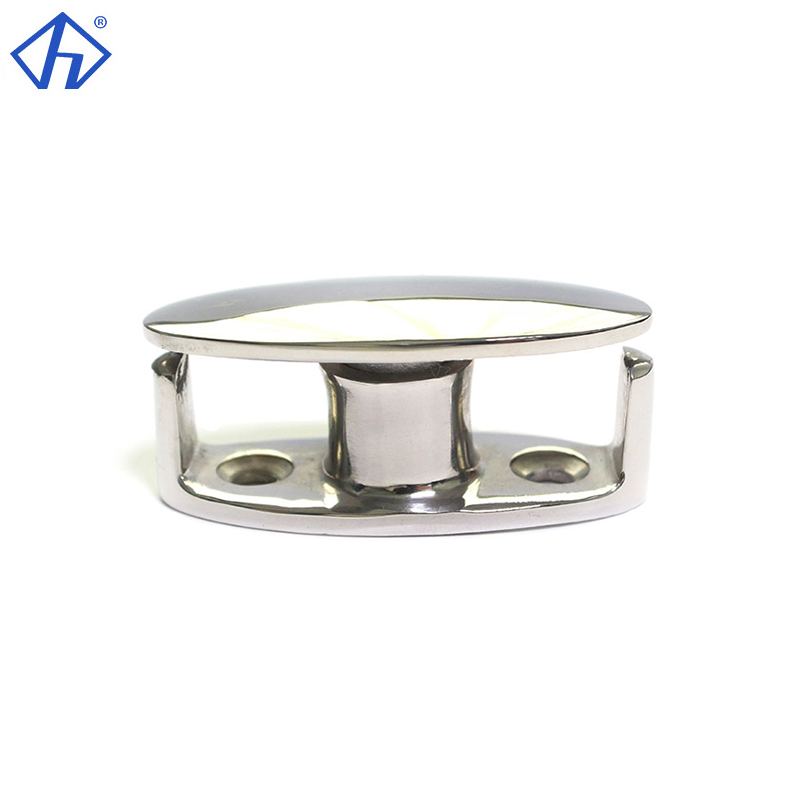
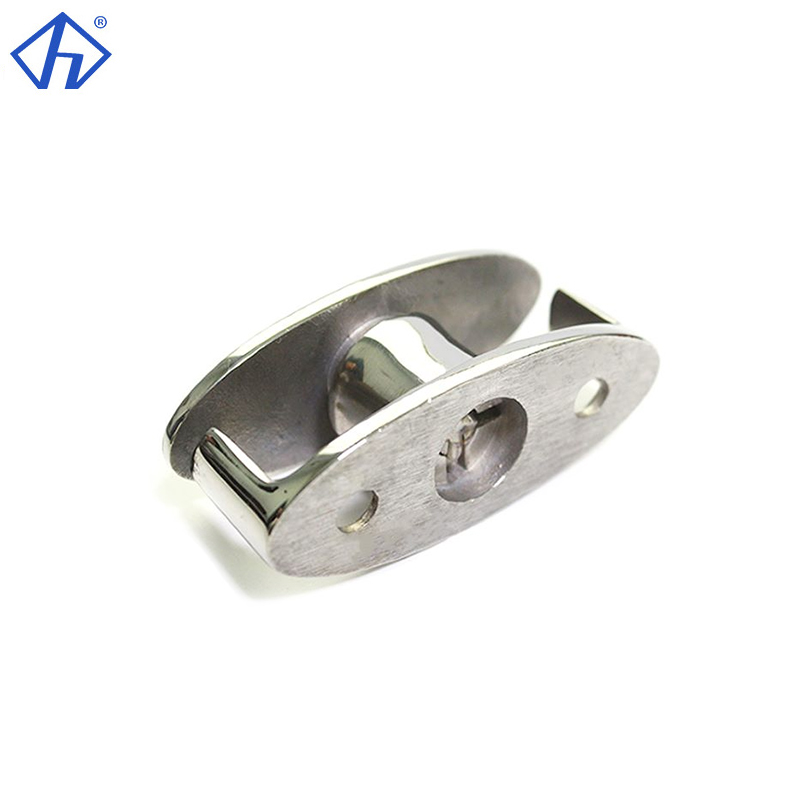
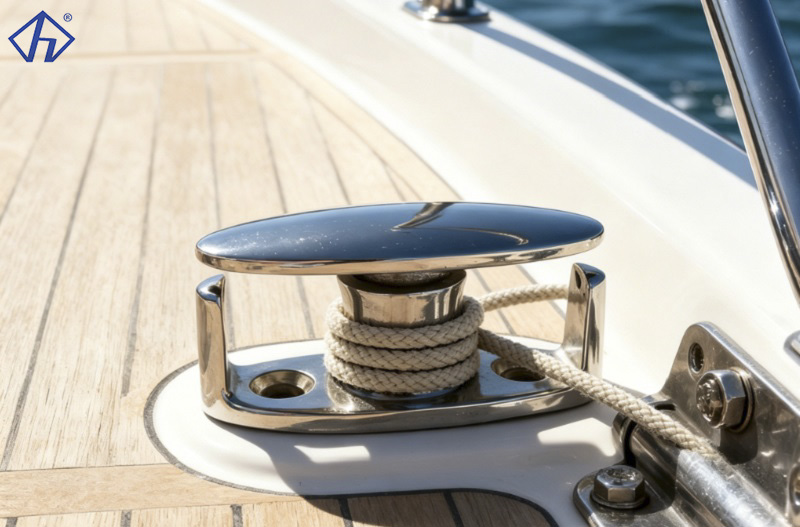
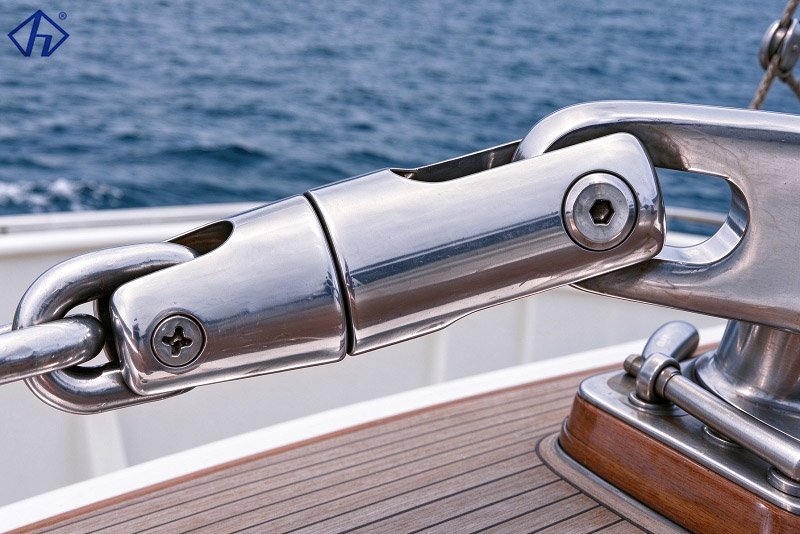
Rotating boat cleat. The overall shape of this rotating boat cleat is an oval that is typical for a streamlined design. The central rotating handle guides the mooring line. The rotating handle features rollers which allow for free rotation. The rope is moored as usual by turning the handle. After choosing a position the handle is pressed down from top to bottom in order to lock it in position. The item is suitable for a deck or a dock.
What Surface Finishing Steps Lead to a Mirror Polish?
Cleats are finished after assembly to form a smooth, reflective surface to prevent corrosion and to look good as well.
Chemical Passivation and Final Treatment
Chemical passivation follows mechanical polishing to restore chromium oxide layers disturbed during fabrication. Acid solutions such as nitric or citric acid dissolve any free iron particles remaining on the surface while enriching chromium concentration at the outer layer — dramatically improving resistance against chloride attack in saltwater environments.
Mechanical Polishing Procedures
sequential grinding the surface of the material is made more smooth by a gradual increase in the fineness of the abrasives removing surface irregularities, the subsequent use of buffing wheels charged with various polishing compounds will further increase the brightness of the material by filling in the minute peaks left by the grinding process. By inspecting the finished product under controlled lighting all areas will have a flawless high level of reflectivity, critical on marine applications where the finish is expected to be of the highest standard in addition to the product’s reliability.
The ultrasonic cleaning operation removes any remaining polishing compounds or other contaminants from the part surface just prior to inspection to conform to the passivation requirements of ASTM A967 for stainless steels.
How Does Yantai Hiever Metalworks Co., Ltd Ensure Product Reliability?
Yantai Hiever Metalworks Co., Ltd is a well established manufacturer of marine grade hardware. They specialize in producing high quality Rotating Boat Cleats made from 316 stainless steel.
Company Expertise and Production Capabilities
Yantai Hiever Metalworks Co., Ltd. is a supplier of top quality precision marine hardware. Their advanced foundry is able to cast parts using the investment casting process that result in a dense microstructure with no porosity. This is unlike the sand casting process which commonly has porosity in the cast part.
In-house CNC machining centers produce consistently dimensioned parts in batch production. All production steps of in-house CNC machining centers are carried out under the scope of an ISO-certified quality management system and are traceable from analysis of the raw materials to the test reports of the finished parts.
Focus on Long-Term Client Partnerships
Hiever’s client-focused approach extends beyond manufacturing excellence toward collaborative customization services tailored for specific vessel requirements or OEM projects. Transparent communication throughout production ensures timely delivery schedules aligned with international shipping demands.
Our corrosion protection products offer the best anti-corrosion protection with consistently high quality using the best certified quality raw materials which have been inspected by spectrographic analysis, extremely precise CNC-machining, passivation and salt spray test. Thus our customers can rely on these products even under constant seawater exposure.
What Are the Core Quality Control Measure Steps In Production?
By maintaining strict quality controls at each stage of production, ensure every cleat perform well in harsh marine environments.
Inspection Stages Throughout Manufacturing Workflow
We check raw material verification first, spectrographic analysis confirms chemical conformity of AISI 316 ingots before melting operations commence. Post-casting dimensional inspections validate tolerance adherence; any deviation triggers rework protocols ensuring consistency across all units produced.
For assessment of surface integrity, a magnified visual examination can be supplemented by non-destructive testing, such as dye penetrant testing, to reveal minuscule defects that are not visible with the naked eye before the polishing stages are performed.
Testing Protocols Before Shipment
Our load-bearing tests mimic all conceivable mooring situations on cleats that have already been installed. By varying the force and direction of the mooring, we can verify that the safety reserves of the cleat far exceed any average operational requirement. The salt spray test simulates long-term exposure of cleats to seawater. This test demonstrates the corrosion resistance of cleats over the lifespan of typical applications such as yachts or commercial ships.
Final visual check on finished production lots prior to packaging to confirm that all items meet a consistent quality standard. Once approved they are dispatched to export distribution centers around the world via the Yantai Hiever logistics network.
Conclusion: The Integration of Craftsmanship and Engineering Precision in Marine Hardware Production
Rotating boat cleats are a product that is made from molten 316 stainless steel castings, precision machined, rotationally assembled, mirror polished and inspected item by item in the production lines of Yantai Hiever Metalworks Co., Ltd. for combining the metallurgical science and the engineering art.
FAQs About Marine Boat Cleats Manufacturing
1. Why is 316 stainless steel preferred for boat cleats rather than 304 ?
316 stainless steel, as opposed to standard 304 grades, contains molybdenum which greatly enhances its ability to resist corrosion in saltwater as opposed to other applications.
2. What distinguishes investment casting from sand casting in producing boat cleats?
Investment casting offers the superior dimensional accuracy and surface finish that is needed for highly detailed components that incorporate functional details, such as rotational components used in advanced yacht fittings.
3. How long does it typically take from casting to final polishing in mass production?
Depending on batch size complexity plus finishing requirements including mirror polish certification cycles—the complete process generally spans two to four weeks per production run at optimized throughput rates.
4. Can mirror-polished finishes impact mechanical performance of boat cleats?
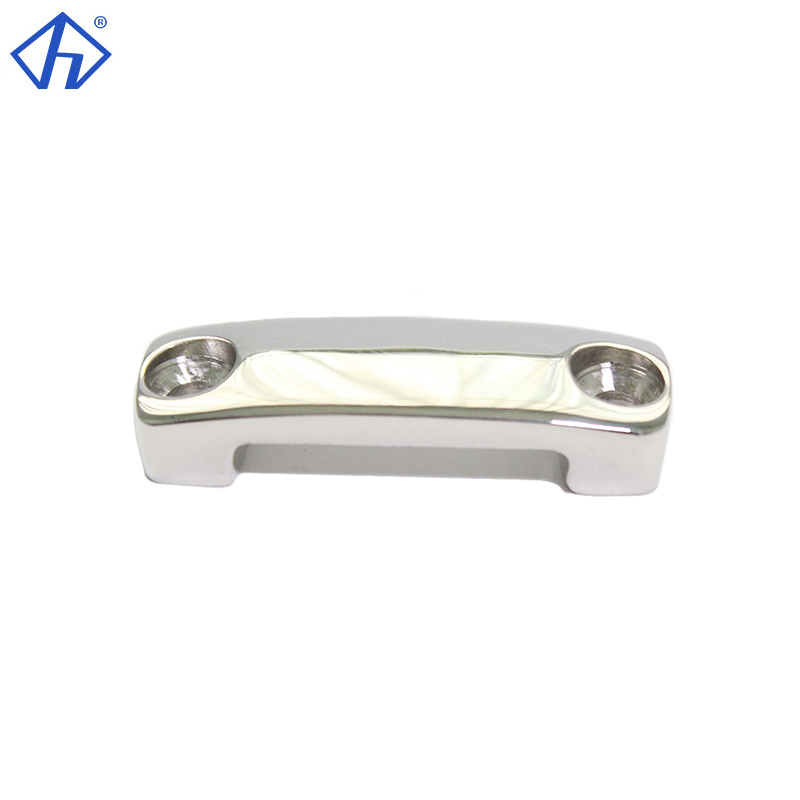
No, we don’t alter the mechanical properties of the items that we mirror polish. We mirror polish items to High Visual Quality & to enhance their corrosion resistance by filling in of micro-crevices etc. where Chloride ions could start localized attack. Our casted AISI 316 hardware products are of strong integral structure & the items are made by Yantai Hiever Metalworks , a well known marine hardware manufacturer globally recognized for their Durable & Precision Made products. Items like our heavy-duty rotating rope cleats (63×25 mm) and other common marine hardware are specifically designed for use on Yachts & withstand tough Maritime service conditions. All items are made to exacting quality standards & form part of Hiever’s wide product range.



Leave a comments