

AISI 316 is one of the more reliable materials used for marine hardware and one of the most common used for thru-hull fittings that are immersed in seawater. It is commonly used in yacht construction as well as commercial vessels and offshore structures. It is a molybdenum containing stainless steel that offers resistance to corrosion caused by chlorides.
However, in real life marina environments, i.e. outside of a lab, they are by far more aggressive than the lab test environments previously outlined. Sea water continuously attacking the surface of a material in a boat, low oxygen zones, mechanical stresses, and the typical poor installation practices found in many marine thru-hull applications can all lead to some form of unexpected localized attack even on the highest quality 316 SS material. These thru-hull units are amongst the most critical applications on a boat where only the smallest amount of surface damage can result in serious problems such as leakage or structural failure over time.
The above failures cannot be explained by a simple listing of materials used. Rather, an understanding of the fundamental and complex mechanisms of electrochemical failure, environmental influences, and manufacturing tolerance is required to understand the true limitations of a material for long-term service in a marine environment.
An in-depth look into the primary causes of corrosion in thru-hull fittings made from 316 stainless steel. An examination of the many ways in which modern design and manufacturing have been able to decrease the effects of corrosion in a variety of demanding saltwater applications.
What Causes 316 Stainless Steel Thru-Hull Fittings to Corrode in Saltwater?
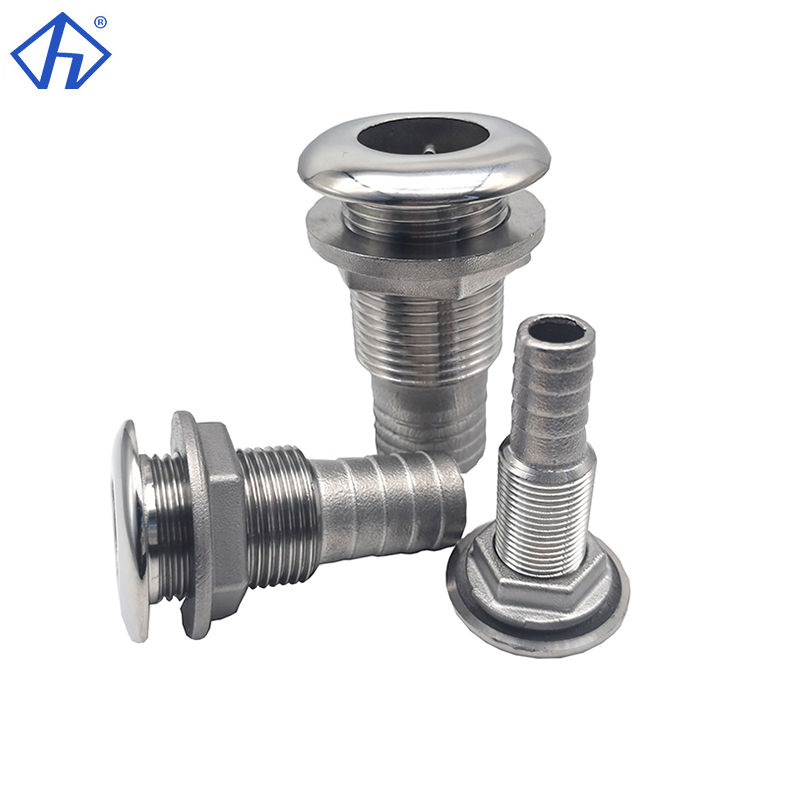
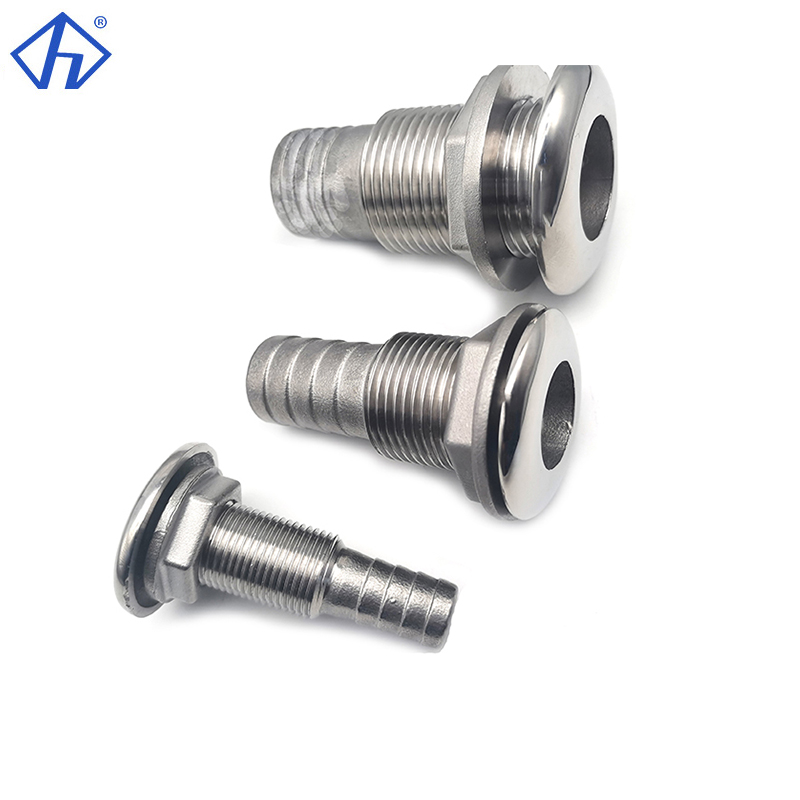
The problem of corrosion on vessels operating in marine environments is a very complex electrochemical process which even the best of corrosion resistant materials can not handle. Even though AISI 316 stainless steel is generally classified as marine grade, the degree to which it resists corrosion in saltwater environments is strongly influenced by a variety of environmental factors, by the design and geometry of the components and by the nature and frequency of the maintenance that they receive. The AISI316 Stainless Steel Thru-Hull Outlet Marine Vessel Accessories Wholesale is made of casted stainless AISI316, long stability and high strength, no worries rust even in saltwater occasions. But also this high-grade material can be affected by localized corrosion.
The Role of Chloride Ions in Pitting and Crevice Corrosion
Chloride ions from seawater attack stainless steel by breaking the passive chromium oxide film which protects the steel from corrosion. The attack is local and can progress rapidly to form a pit or crevice corrosion. Such attack occurs in low oxygen or shielded areas such as threads, joints, etc around thru-hull fittings. In particular, very tight mechanical assemblies can form lock-up type conditions that create areas of very poor flow and hence high concentration of chlorides and low oxygen in the trapped seawater. Such conditions are very prone to pitting attack.
The Effect of Oxygen Concentration and Temperature
Oxygen can play a significant role in the passive layer formation on stainless steel surfaces. “Deprived”-areas, like those under biofoulings or in narrow spaces, might not be able to self-passivate. As the temperature is increasing the diffusion of the ions is enhanced and the corrosion rate will increase. Marine growth on surfaces in contact with sea water will decrease the oxygen supply to the metal surfaces. For proper passivation of surfaces in contact with sea water, cleaning is required on a regular base.
The Influence of Galvanic Coupling with Dissimilar Metals
Galvanic Coupling – Although 316 stainless steel is more noble than most materials that it may come into contact with when exposed to seawater, it can still form an electrochemical couple with less noble metals, such as aluminum and bronze, to form a galvanic cell. As with any galvanic couple, the less noble metal will corrode preferentially in an attempt to equalize the potential difference between the two materials. After long periods of exposure, however, junctions of stainless steel can also undergo attack if there is a conducting path and no effective electrical isolation, by non-conductive gaskets or bushings for example.
How Do Environmental Factors Accelerate the Degradation Process?
The environmental exposure of a fitting influences how fast it deteriorates in saltwater immersion. The rate of deterioration is determined by parameters like the water flow, stagnation areas and the salinity. These parameters influence the form of the corrosion.
The Impact of Water Flow and Stagnation Zones
To maintain an oxide film on a metal surface in service constantly moving water is necessary to erode the film. Standing water on the other hand promotes corrosion by accumulating salts and organic material around fittings. Such local ‘highs’ in concentration of the aggressive species and in low pH create ‘hot spots’ of increased attack. Designing thru-hull fittings to provide adequate hydrodynamic flow to prevent ‘dead’ area’s is critical to minimizing corrosion in such components.
The Function of Cleaning and Maintenance Procedures
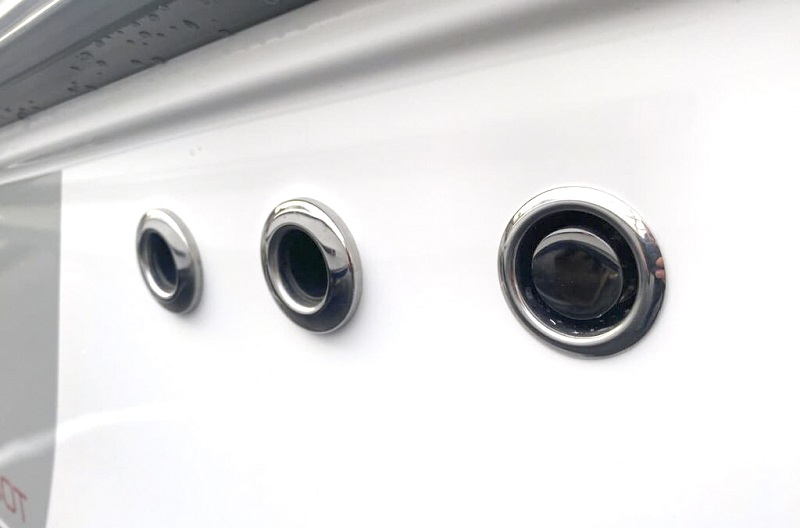
Most of damage results from ignoring routinely remove salt from surfaces, which leads the salt to re-form into crystals as it evaporates.Removing the scratches in a surface with a mechanical polish will help to a great extent in keeping a surface from fouling as the fouling organisms have fewer surfaces to adhere to. The solid cast 316 stainless thru-hull on your attractive vessel bilge area has a highly polished surface to keep it looking great for years. Check for any discoloration or small pits in periodic inspections to protect structural integrity and prevent severe damage.
What Material Properties Make 316 Stainless Steel Susceptible Despite Its Reputation?
316 stainless steel contains molybdenum which enhances resistance to pitting by chlorides, but that does not mean that 316 is always pitting resistant. Many environmental and material-related factors will increase its risk of pitting.
Metallurgical Factors Affecting Corrosion Resistance
Bloating and distortion during fabrication can result in unintended heat treatment of a part. The worst scenario occurs during welding where the heat affected zones (HAZ) of the welds can have their micro-structure altered by the high temperatures. The formation of chromium carbide along grain boundaries can occur if the cooling rate does not allow for sufficient time for complete dissolution of chromium carbide in the austenitic matrix. Even clean carbon steel fabrication tools can transfer iron to the surface of the stainless steel resulting in iron being released as free particles. These particles act as nucleation sites for rust in the presence of moisture.
Compared with Duplex And SuperAustenitic Grades
Duplex stainless steels feature a dual ferritic-austenitic microstructure, delivering higher mechanical strength and markedly improved resistance to stress corrosion cracking versus conventional 316 stainless steel. Super-austenitic grades including 904L boast elevated nickel and molybdenum levels for outstanding resistance to high-chloride seawater, yet they incur substantially higher material costs and demand more complex machining and fabrication. In a word ,when choosing materials, we need consider the vessel type and working conditions to choose the best option between performance and cost.
How Manufactures Guard Modern Thru-hull Fitting Against Corrosion?
Advanced material processing has highly improved the corrosion resistance of marine parts, to prolong its service life.
Advanced Passivation and Surface Treatment Techniques
Machining surface free from iron contamination can be passivated with a treatment of either Nitric acid or Citric acid, thereby enriching the chromium oxide layer to provide uniform protection. By further polishing the peaks left from machining, the surface reflectivity and fouling release can be significantly enhanced by electropolishing. For extremely aggressive environments, a ceramic or even a fluoropolymer coating can be applied as a physical barrier to prevent chloride penetration.
Design Strategies That Minimize Corrosive Stress Points
Recent developments in engineering design have focused on reducing the volume of crevices in which stagnant sea water can reside. Care has been taken to engineer smooth transitions through threaded holes to minimize the risk of erosion due to turbulent flow. In addition, means for drainage have been designed into the housing to drain water from behind flanges and washers. Care has also been taken to select non-conductive gaskets to prevent galvanic attack where different metals are incorporated into an assembly system.
How Does Yantai Hiever Metalworks Co., Ltd Ensure Long-Term Reliability?
Yantai Hiever Metalworks Co., Ltd. is specializes in premium precision marine hardware, designed to withstand the toughest offshore environments. With a range of advanced casting techniques and rigorous testing, Hiever Metalworks is able to manufacture a diverse range of products to meet customer requirements.
Quality Control and Material Traceability Practices at Yantai Hiever Metalworks Co., Ltd
Are you looking for a China thru hull outlets supplier? Contact HIEVER thru hull outlets supplier in China today. HIEVER thru hull outlets are made of casted stainless AISI316 with long stability and high strength, so no rust problem even in saltwater. HIEVER thru hull outlets are made from the highest quality stainless steel AISI316/316L raw materials. Each batch of raw materials is analyzed by Spectrographic analysis before machining to confirm the materials are of AISI 316/316L quality. All HIEVER thru hull outlets are machined by CNC machines to ensure accurate dimensions and tight tolerances for a watertight seal. The finished thru hull outlets are then Passivated, Pressure Tested and conducted Salt Spray Test before shipping out. We use these tests to mimic ocean conditions, let the thru hull stay in the seawater over a long duration.
What Need Marine Engineers Consider When Selecting Thru-Hull Fittings?
While selecting thru-hull fittings for vessels operating in seawater, marine engineers need to consider both environmental exposure and alloy selection, rather than only simply referencing a nominal grade.What is more, engineer also needs to consider the function and installation point , for example, it is outlet or intake , it is just let water out or in ? or intake strainer.
Practical Recommendations for Long-Term Durability
Hardware shall be purchased from qualified suppliers, they can supply full traceability for the raw materials used in production. Dissimilar metals must not be mixed without proper dielectric isolation such as using nylon washers or PTFE gaskets between corresponding parts. An organized inspection program must also be implemented with special attention to submerged joints below the waterline as oxygen depletion can cause rapid local attack not visible during normal above deck inspections.
Conclusion: Enhancing Corrosion Resistance Through Informed Design and Manufacturing Choices
While failures of thru-hull fittings in saltwater environment typically are not due to inherent defects of AISI 316 material, but rather due to a multitude of factors such as the intensity of chloride exposure, insufficient maintenance, geometric errors in installation as well as galvanic dissimilarity of connected materials, the surface finish of a fitting, polished by advanced techniques, such as electropolishing, combined with a sound quality control program as embodied in the manufacturing practice of Yantai Hiever Metalworks Co., Ltd. of China, can lead to extended service life and assure safety of a vessel in prolonged navigation.
FAQs
1. Why does 316 stainless steel still corrode in seawater despite being named as “marine grade”?
316 contains molybdenum for enhanced corrosion resistance, however the passive film can be penetrated by chloride ions in seawater under certain circumstances, leading to pitting or crevice corrosion.
2. How often to inspect thru-hull fittings on vessels operating in saltwater?
6 Monthly visual inspections are recommended. Detailed inspections should be carried out annually at haul-outs paying particular attention to narrow gaps under washers that are sealed.
3. Can the outer coatings completely eliminate corrosion risk on boat stainless steel fittings?
Generally speaking , the outer coatings delay the corrosion damage but do not prevent it. Once a breach in the coating occurs and the underlying metal is exposed, corrosion can recommence and proceed by electrochemical attack.So this is not effective methods to pray a coating film on the stainless boat fitting hardwares.
4. What alternative materials perform better than 316 stainless steel in aggressive marine environments?
Yes ,duplex alloys (2205) and the super-austenitic alloys (904L) have a higher resistance to attack by chlorides ,however ,they have a higher cost and longer delivery time .
5. Why choose Yantai Hiever Metalworks Co., Ltd for marine thru-hull fittings?
Combining certified quality raw materials that have been verified by spectrographic analysis with the highest precision CNC machining and subsequent passivation and salt spray testing allows for the best and most consistent anti-corrosion protection. Their hardware provided by Hiever Metalworks can be specifically designed and optimized for long lasting protection in saltwater environments, applicable for both yachts and commercial vessels.



Leave a comments