

Have the old fitting in front of you when shopping for a marine pad eye plate. There may be a backing plate there, or very little room to get a spanner onto the nuts. Those details can decide whether a replacement is a straightforward swap. The advertised size is worth checking, of course, but so are the holes already in the boat and the hook you intend to put through the eye. Here is a way to work through the purchase without leaving the awkward measurements until installation day.
Where Should You Start with the Size?
A catalogue is handy for finding a likely candidate. When you get down to the actual fit, though, you will want the drawing on the bench with your own notes. An overall length leaves plenty of questions unanswered.
What Does HIEVER List for Its Oblong Plate?
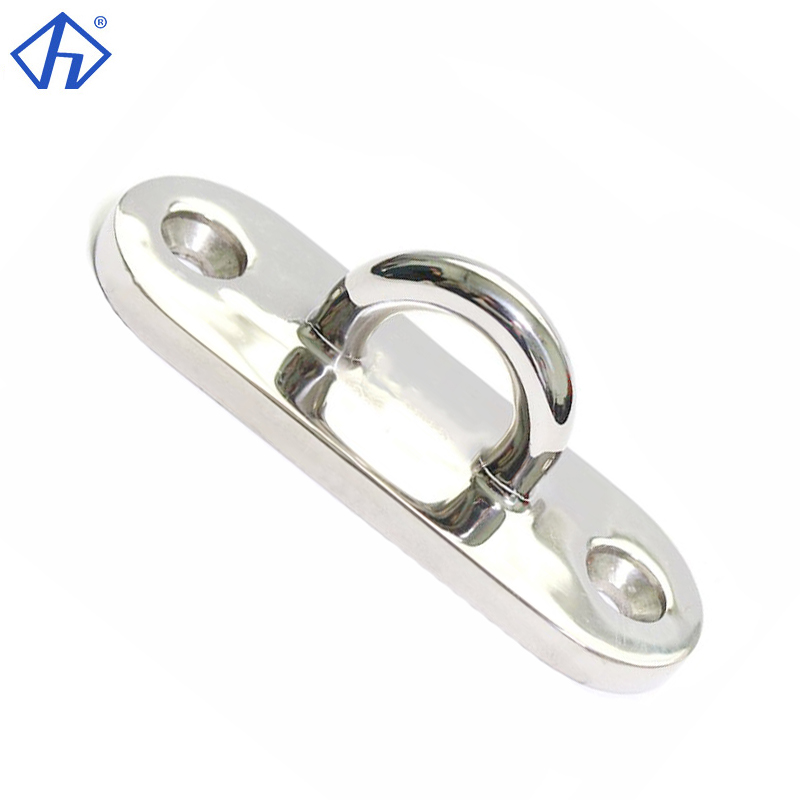
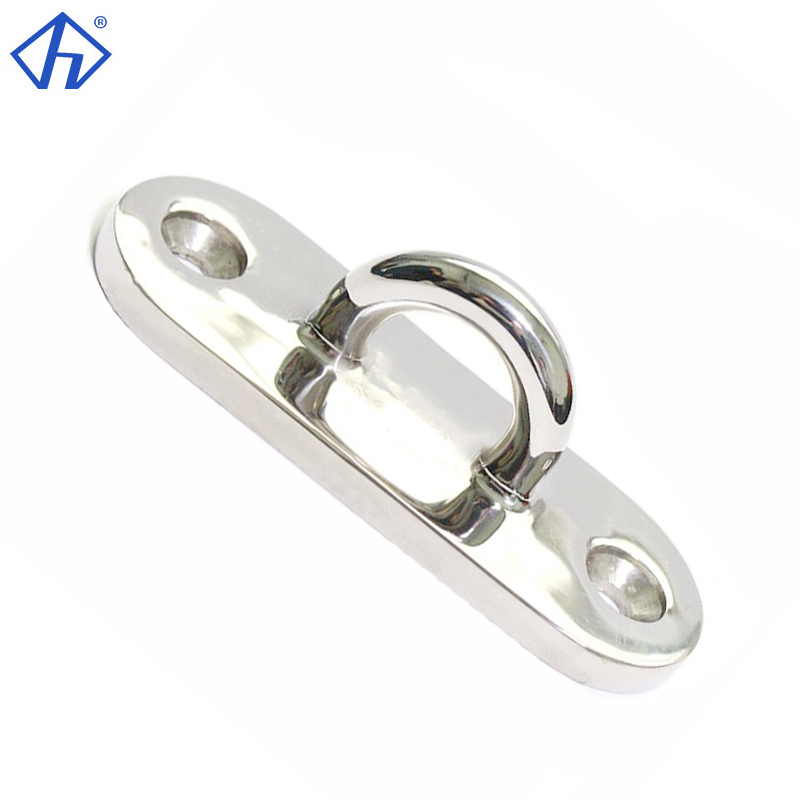
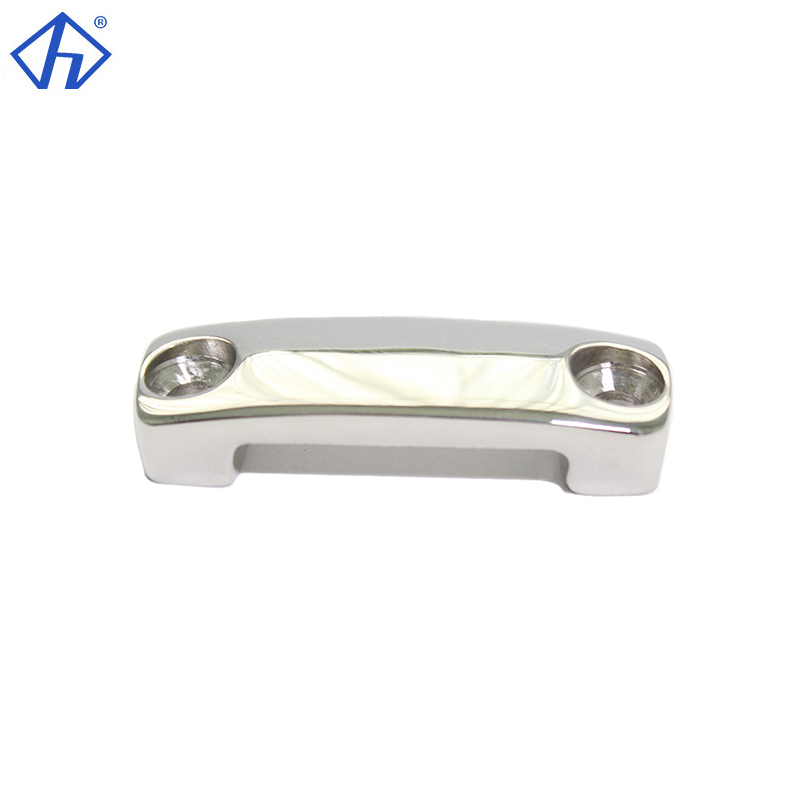
The AISI316 Oblong Eye Plate (75mm/88mm/100mm) is offered in those three sizes on HIEVER’s website. The material entry says 316 stainless steel; elsewhere on the page, HIEVER describes an investment cast part with a mirror finish. You will notice that the text stops short of a full dimension table. Before picking a size, ask what the listed number measures and request the drawing for that version.
Now lay that drawing beside your measurements. Will the base sit entirely on the intended surface? How high does the eye stand? A nearby hatch edge deserves a mark on that sketch too. It is hard to remember just how close things were when you are back at a desk looking through product pages. With several fittings to purchase, give each proposed location its own measurements; the clear space beside one hatch may disappear beside another.
Does Your Hook Have Room to Move?
Mating hook or shackle should be kept on the old plate during measurement process. Pushing the hook through the hole won’t help if it ends up sitting awkwardly against the loop. What really matters is how it finally sits, plus enough room to move when you change the pulling direction. In case of impossibility to try out the fitting, photographed measurements of mating component will be of more use to the supplier.
Will the Hole Pattern Match?
This is where a replacement can become a bigger job than expected. For the fixing pattern, the useful distance is between hole centers. Put the hole diameters alongside that measurement so there is no ambiguity, and leave space in your notes for the base thickness and fastener head.
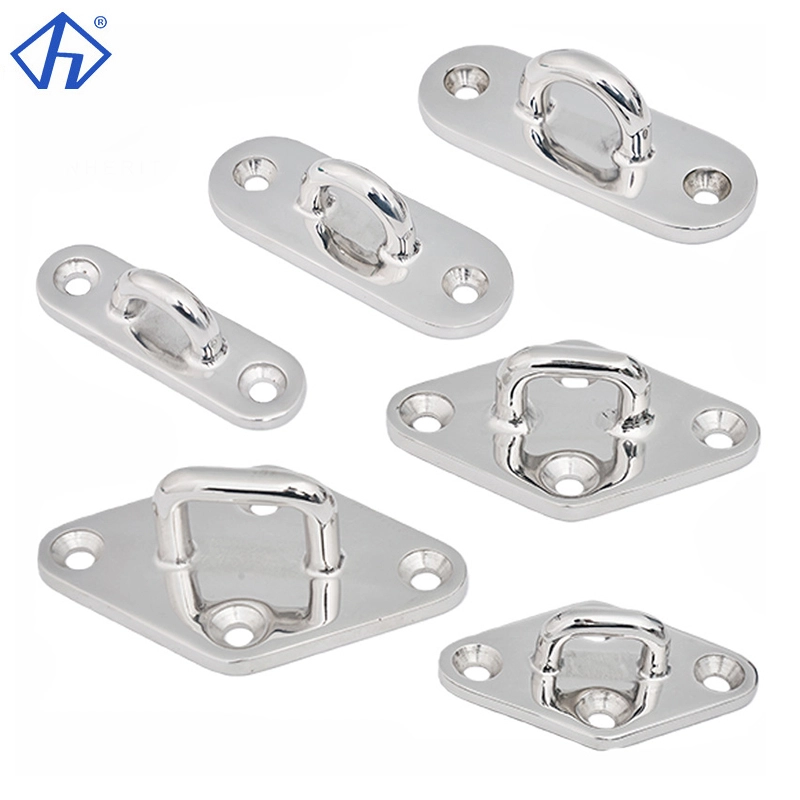
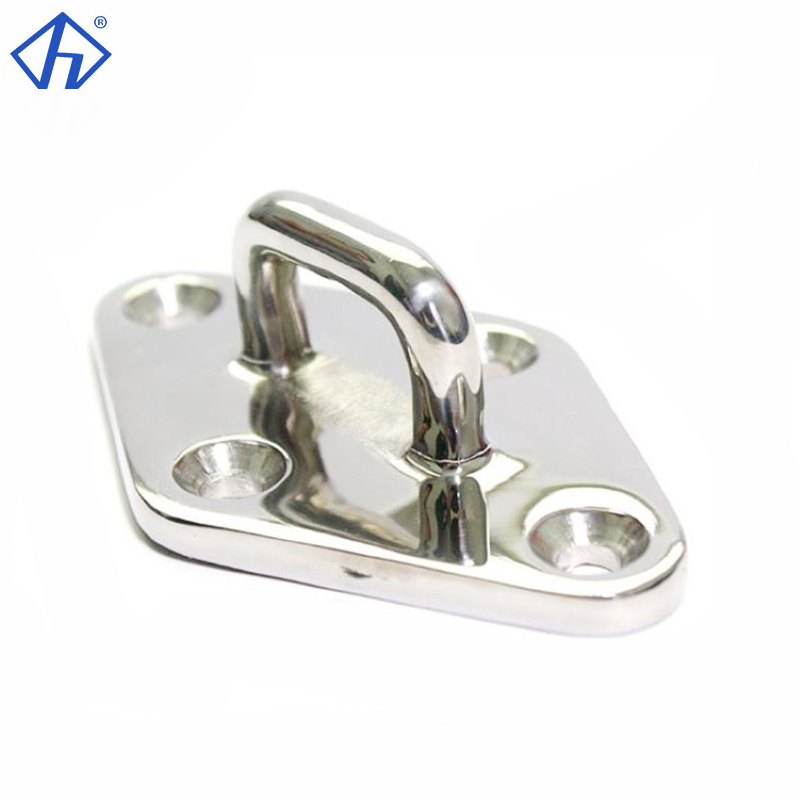
HIEVER’s separate stainless eye plate offers 80, 90 and 100 mm sizes. Seeing “100 mm” on both pages is no reason to assume they use the same holes. Keeping both drawings in view should clear up the question, especially on a boat where you hope to reuse the existing drilling.
With the old plate removed, the mounting area is there to inspect. Are any holes enlarged? Does the surface move when pressure is applied? Are there cracks or signs of damage where the old plate sat? Resolve those questions before using the holes again. Before moving to a new hole pattern, have a look underneath. The fastening position that seems convenient from above could be occupied by a hose or cable, or sit directly over framing.
Will There Be Room to Finish the Installation?
The eye is the visible part of the attachment. Underneath, the nuts and supporting material have their own demands on space. Check them while planning the purchase.
Can You Get a Tool onto the Fasteners?
Try to work out the tightening sequence. Someone may have to hold a nut below while the fastener is turned above. Will a lining need to come off? Is there room for the tool?
A thin panel may require backing to spread the force over a larger area. Ask the boatbuilder or designer to specify that for the actual construction. With a cored deck, get advice on preparing and sealing the holes so water cannot enter the core. These choices depend on the deck, not simply the plate size you have selected.
How Will the Attachment Be Loaded?
Put the expected line direction on the drawing. Show the changing positions as well if that is how the attachment will be used. The supplier needs this context when you ask about permitted applications and documentation for the particular fitting. HIEVER’s oblong plate page gives material and size information, but no numerical working load limit. You cannot take a safe load figure from that page. “Heavy duty” is a product description; the information needed for an engineering assessment still has to be obtained.
How to Confirm What You Exactly Get?
On the oblong item page, you can find the material and surface finish for your inquiry: 316 stainless steel, mirror polished. Those entries should carry through to the quotation. Purchasing teams that need material documentation can make that part of the request at the outset, when the supplier is working out what to quote. There is only so much you can learn from a shiny photograph.
Think ahead to cleaning the installed fitting. Can salt and dirt collect around its base? The sheltered patches around the screws can be awkward to reach. Give the mounting seal and fasteners a look during inspection too, since the exposed loop is only part of what you are checking. Contact with another metal is a detail to discuss with the boatbuilder while sorting out the installation. The same review may be useful for nearby marine deck fittings.
What Should You Ask HIEVER to Quote?
Yantai Hiever Metalworks Co., Ltd. supplies stainless marine hardware and offers OEM and ODM work from drawings or physical samples. Its oblong range is a starting point if you want a cast 316 plate in one of the three listed sizes. Your measurements are the useful starting point for that inquiry.
A standard replacement inquiry need you offer the drawing, and we will offer the price with your qty. If the base shape or fixing pattern differs, that becomes a custom discussion, supported by your drawing or sample. Include the mating connector and intended use. That makes the conversation about a part the supplier can compare with your requirements, rather than an approximate match to a photograph.
Conclusion
Keep the mounting sketch beside you when choosing a marine pad eye plate. The opening, fixing holes and underside access all deserve a place on it. HIEVER lists these oblong sizes: 75, 88 and 100 mm, material is 316 stainless steel. Once you pick the part you want, we can use its drawing to sort out the rest of the fitting issues and get all data needed for your working condition. That is a better point to discover a mismatch than halfway through drilling the deck.
FAQs
Will the Old Holes Match a Longer Plate?
Not necessarily. A longer plate may have a different hole pattern, even if it looks similar to the old fitting. Before ordering, measure the center-to-center distance between the existing holes and check the hole diameters. Compare these measurements with the supplier’s drawing. If they don’t match, you’ll need to assess whether new holes can be drilled safely.
Is There a Published Working Load for This Model?
We can’t figure it out just from the total length. We need the center distances and hole sizes for both pieces. The overall length won’t show how the mounting holes line up.
Which Pictures Should Accompany the Measurements?
A ruler beside the old plate is useful, as are views of the existing holes and underside. We will add pictures of the hook or shackle that will goes through the eye. Add measured dimensions and the quantity required.



Leave a comments