

A marine stanchion base acts as the link between your railing pipe or support post and the boat’s framework, so getting the wrong part can lead to headaches long before you even start fitting it in place. For boatbuilders, repair yards, marine hardware distributors, and boat owners, the most important factors are tube diameter, mounting angle, base shape, deck condition, and material. A suitable marine stanchion base should match the rail system while fitting securely on the available mounting surface. This guide explains how to compare these factors when selecting stainless steel handrail and bimini fittings for boats ,yachts and other rail frame application,
What Should You Check Before Choosing a Marine Stanchion Base?
A stanchion base should not be selected by appearance alone. Products that look similar may be designed for different tubing sizes, mounting angles, or installation surfaces. Before ordering, buyers should first confirm how the base will connect with the rest of the handrail system.
Why Does Tube Diameter Matter?
Tube diameter is one of the first specifications to check because the rail and base need to work as one system. A fitting designed for a 22 mm tube should not automatically be assumed to fit a 25 mm or 32 mm tube.
For replacement projects, measure the outside diameter of the existing tubing instead of relying only on an old purchase record. In new boatbuilding projects, keeping tube dimensions consistent across the rail system also makes it easier to match elbows and tees, rail ends, stanchion bases, and other marine handrail fittings.
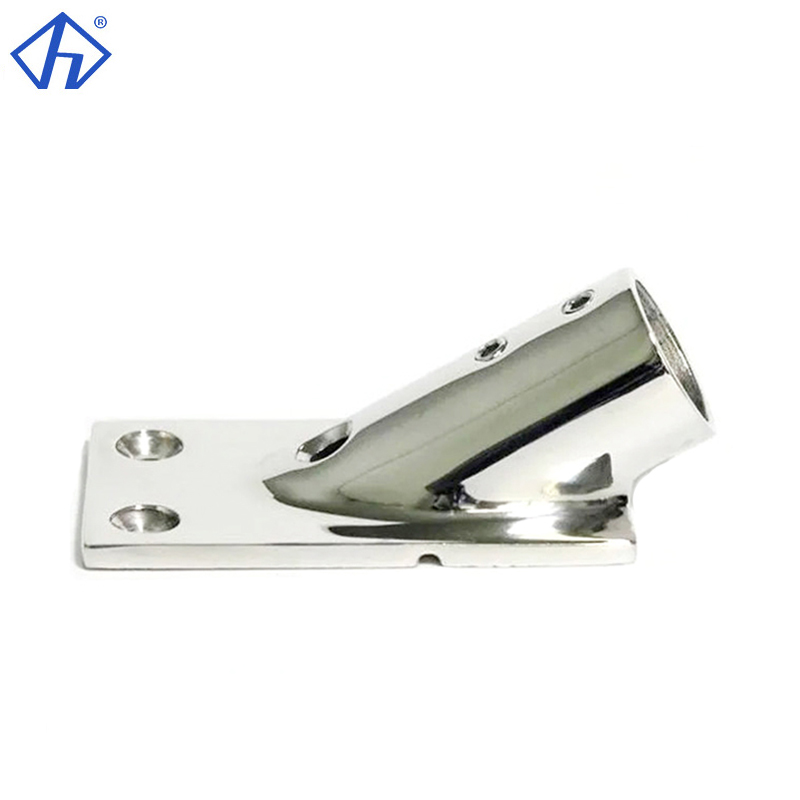
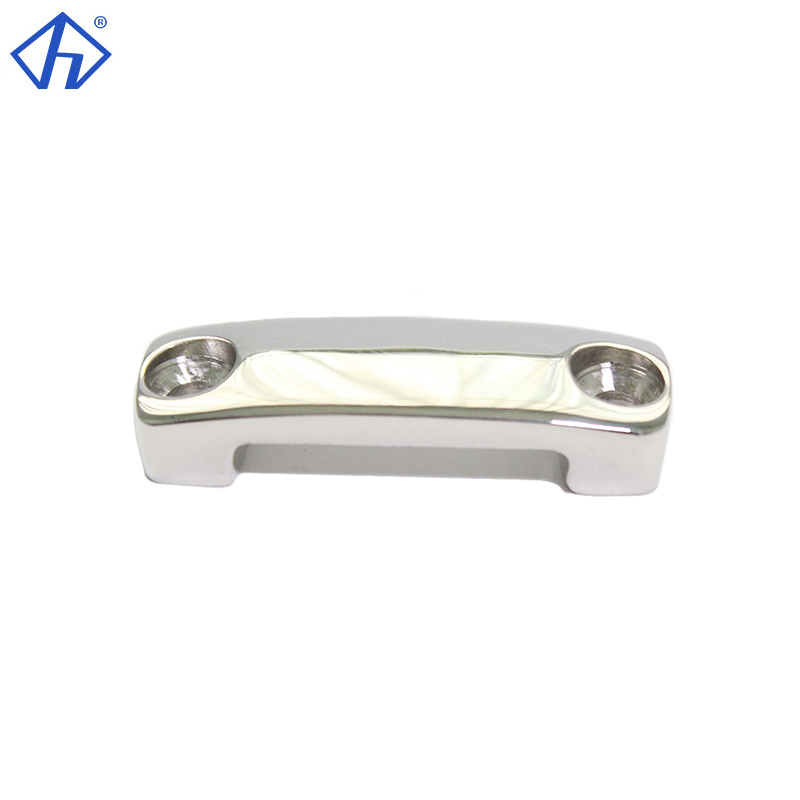
HIEVER’s 30-degree rectangular stanchion base is available for 22 mm, 25 mm, and 32 mm tubing, giving buyers several commonly used sizes within the same product family.
How do you pick the correct angle for your stanchion base?
The mounting angle dictates how the handrail slopes as it comes up off your boat’s deck or hull side.The correct angle therefore depends on both the mounting surface and the desired rail geometry.
When should you go with a 30 degree stanchion base?
This type of marine stanchion base works well in situations where the post has to angle out from its mounting surface, rather than sitting straight up at 90 degrees. This is relevant when handrail tubing follows the sloping profile or design lines of a boat.
HIEVER offers a Rectangle Stanchion Base 30 Degree (22/25/32mm) with a mirror-polished finish. Its marine stainless steel construction makes it suitable for visible rail systems where both durability and appearance are important.
The correct angle should still be confirmed from the actual installation position. Don’t just pick a 30 degree base because it looks roughly right for your needed angle — this can lead to alignment issues further down the rail run.
When Should You Consider 45°, 60° or 90° Bases?
Different locations on the same vessel may require different mounting angles. HIEVER’s stanchion-base product range includes rectangular options at 30°, 45°, 60°, and 90°, along with round-base designs.
A 45 degree base works well for gentle slopes, whereas the 60 degree variant creates a much more pronounced offset between the post and its mounting surface. The 90 degree rail base is typically the better choice whenever the stanchion needs to sit straight up, perfectly square against the mounting plane.
For OEM work or brand new builds, it’s best to double check the required angle using rail drawings or real world installation dimensions before placing your order for these fittings.
How Does Deck Type Affect Marine Stanchion Base Selection?
The mounting surface affects more than appearance. The base needs sufficient installation space, a suitable contact area, and access for secure fastening.
What Should You Check on a Flat Deck?
A broad, flat deck often provides more flexibility for positioning a rectangular stanchion base. However, installers still need to consider the size of the base, fastening locations, nearby deck edges, and access below the mounting area.
For replacement work, checking the footprint of the existing fitting can help determine whether a new base can use the same location. A product with the correct tube diameter but a significantly different base shape may require new mounting points.
This is especially important for distributors supplying replacement boat rail fittings, since the customer may expect a part that fits an existing installation with minimal modification.
What About Side Mounting or Limited Spaces?
Not every marine handrail base is installed on a large horizontal deck. Some installations are located on yacht sides or other restricted surfaces.
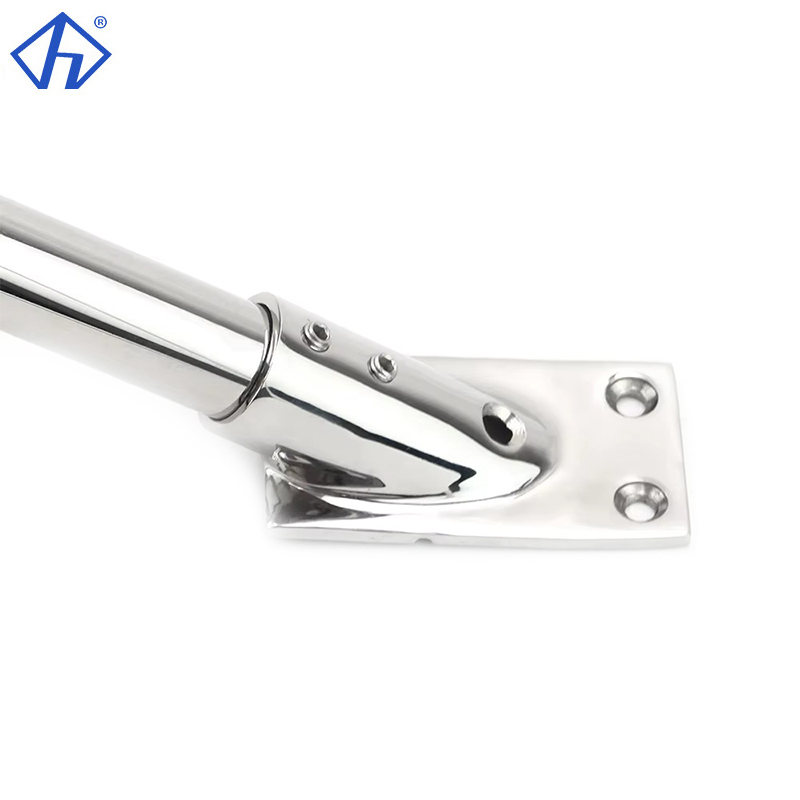
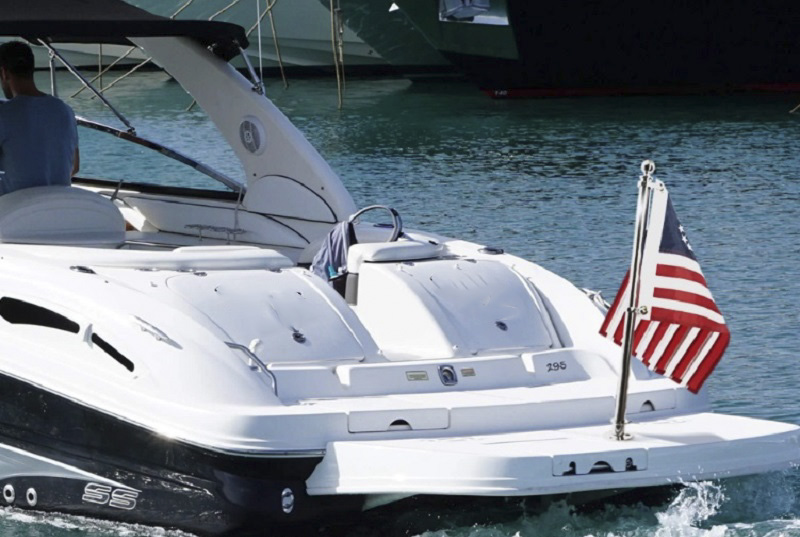
HIEVER notes that its rectangular rail bases can be used on yacht decks and sides. In these situations, base shape becomes important. A rectangular base may work well where there is a clearly defined flat mounting zone, while a round stanchion base may be more suitable where available space or surrounding geometry favors a compact footprint.
The actual mounting surface should therefore be checked before choosing between round and rectangular designs.
What makes 316 stainless steel critical for boat stanchion bases?
These fittings face continuous exposure to salt spray, damp conditions and rain, constantly switching between wet and dry out on the water. The material you opt for will directly impact both corrosion performance and how good the hardware stays looking long term.
So what material should you actually be shopping for?
AISI 316 stainless steel is what most boat hardware relies on, since it handles all that salt heavy seawater exposure really well. HIEVER uses AISI 316 stainless steel throughout its full line of stanchion bases, covering both round and rectangular rail base styles.
Its stanchion bases also use polished surfaces to provide the bright appearance commonly expected on yacht handrails and exposed boat hardware.
It’s easy to mistake a shiny polish for quality material, so always cross check the stainless steel grade on your quotes and product specs. Routine fresh water washing will also help clear away salt residue and dirt build up.
What Information Should You Provide Before Ordering?
Many sourcing problems come from incomplete dimensions rather than complicated technical issues. A clear RFQ can greatly reduce the risk of ordering the wrong stainless steel stanchion base.
Which Specifications Help a Supplier Select the Correct Base?
Buyers should provide the tube outside diameter, required mounting angle, preferred base shape, mounting location, quantity, and material requirement. Photos with dimensions are particularly useful for replacement parts.
For custom or OEM projects, a technical drawing or physical sample can provide additional information about hole locations, dimensions, tube orientation, and surface geometry.
It is also useful to describe the complete rail system rather than only the individual base. Matching stanchion bases with tube elbows, tees, end fittings, or other stainless tube fittings can help maintain consistency throughout the finished assembly.
Why Is HIEVER a Reliable Marine Stanchion Base Supplier?
Choosing the right product also depends on finding a supplier that can support different rail configurations and purchasing requirements.
What Can HIEVER Provide for Marine Handrail Projects?
Yantai Hiever Metalworks Co., Ltd. supplies a broad range of stainless steel marine hardware, including rail bases, deck hinges, Bimini fittings, tube fittings, handrail fittings, and other yacht hardware.
According to their website, the company has over two decades working in this industry. They stock more than 300 standard products and serve customers across 30 plus countries. Their selection of marine stanchion bases covers various tube sizes, mounting angles and base shapes. This gives boat builders, resellers and OEM purchasers plenty of flexibility when picking parts to put together a full handrail system.
How Should You Make the Final Choice? — Conclusion
Choosing a marine stanchion base starts with three practical questions: What is the tube diameter? What mounting angle is required? What type of deck or side surface will hold the base?
After these factors are confirmed, buyers can compare rectangular versus round bases, stainless steel grade, surface finish, and compatibility with related handrail fittings.
For rail systems using 22 mm, 25 mm, or 32 mm tubing, HIEVER’s 30-degree rectangular stanchion base provides one available option, while 45-degree, 60-degree, and 90-degree products support other rail layouts. Accurate measurements before ordering are far more reliable than choosing a fitting from appearance alone.
FAQs
Can you use a 25 mm stanchion base with a 1 inch tube?
Don’t just take it for granted that these two sizes will swap out for one another. Before placing your order, measure the tube’s real outer diameter and cross reference it against what the supplier lists. Even tiny differences in dimensions can mess with how parts fit and how well everything goes together during installation.
Is a Round or Rectangular Stanchion Base Better for Boats?
Neither shape is always better. Rectangular bases can suit defined flat mounting areas, while round bases may work well where space or surrounding geometry favors a more compact footprint. The mounting location should determine the choice.
What Should I Send a Supplier When Requesting a Marine Stanchion Base Quote?
Make sure to supply the tube’s outer diameter, mounting angle, base style, where it will be fitted, material requirements, order quantity, plus any drawings or photos you’ve taken of the existing setup. Getting all these details over upfront helps avoid ill fitting parts and cuts down on extra rework later.



Leave a comments