

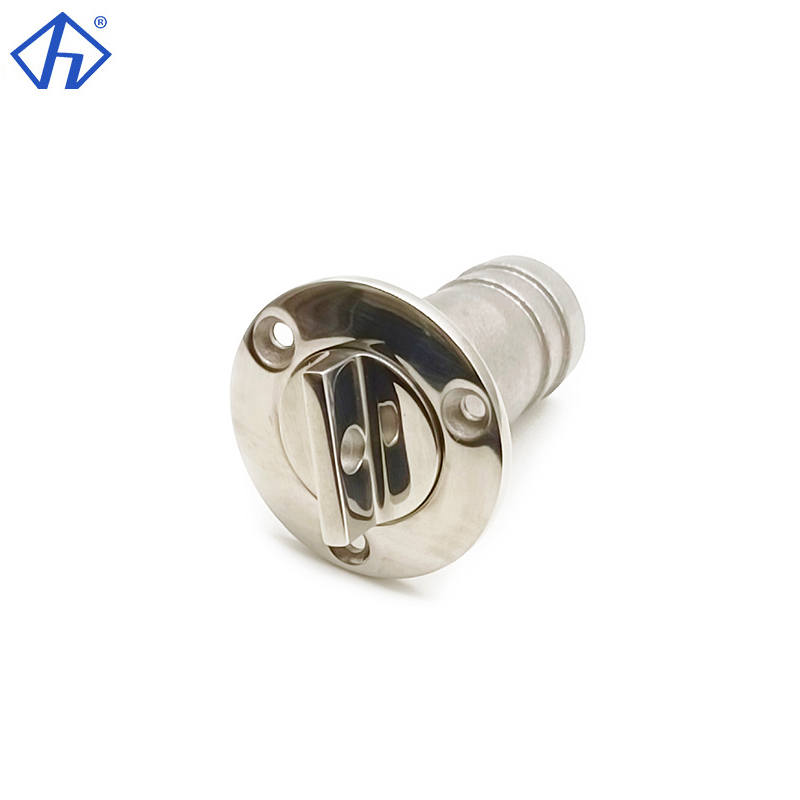
A deck fill and a garboard drain plug may look similar because both can have a flanged body, removable cap, and watertight seal. Their functions, locations, flow directions, and operating risks are usually very different. Selecting a fitting by appearance alone may cause slow filling, water contamination, poor drainage, or an unsafe opening below the waterline. This guide compares the two products and explains when a dual-purpose water fuel deck fill/boat drain plug may be considered.
What Does a Deck Fill Do?
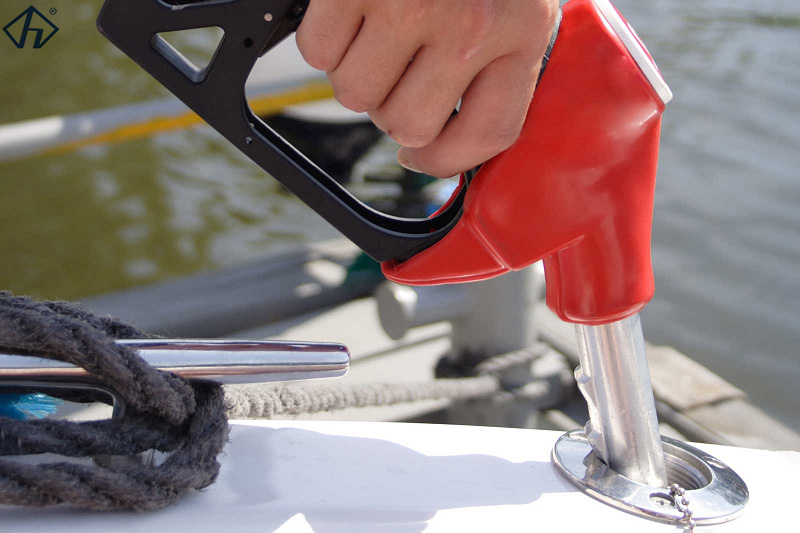
A marine deck fill provides a controlled access point for transferring fuel or fresh water into an onboard tank. Waste deck fittings may also support pump-out service. The fitting must match the liquid, fill hose, tank system, installation space, and applicable vessel requirements.
Where Is a Deck Fill Normally Installed?
A deck fill is generally mounted on an accessible deck, side deck, or gunwale. A hose or pipe runs from its neck over to the tank. Most off the shelf units are labelled WATER, DIESEL FUEL, PETROL or WASTE, letting users easily tell which tank is the right one to use.
VETUS lists 38 mm deck entries for water and diesel and a 51 mm diesel option, while PERKO offers fuel and water fills for 1-1/2-inch hose. These examples show why buyers must confirm both the intended liquid and the hose connection before ordering.
For gasoline systems covered by U.S. recreational-boat regulations, the fill opening must be positioned so that a specified fuel overflow will not enter the boat. Fill hoses must also be correctly secured to their fittings. A fuel deck fill is therefore one component of a complete fuel system, not simply a polished cap mounted on the deck.
What Does a Garboard Drain Plug Do?
A garboard drain plug closes a drain passage in a low part of the hull or bilge structure. It allows collected water to leave the boat when opening the drain is safe and intentional.
Where Is a Garboard Drain Plug Normally Installed?
Unlike a deck fill, a garboard drain is commonly classified as underwater hull hardware. PERKO offers exterior-mounted and flush-mounted models with specified pipe threads, flange sizes, screw arrangements, and hull-thickness limits.
The drain is normally positioned where water can escape from a low internal area while the vessel is hauled out. West Marine describes a garboard plug as a fitting that can be opened while the boat is “on the hard” to release accumulated rainwater. The plug must be securely installed before launching because an open drain below the waterline can allow water to enter the hull.
A garboard plug is not a replacement for a bilge pump, seacock, deck scupper, or tank filler. It is normally a manually operated closure rather than a continuously open discharge outlet.
How Are Deck Fills and Garboard Drain Plugs Different?
The safest comparison is based on system function rather than surface appearance. Even two stainless steel fittings that come with seemingly identical flanges can call for totally different installation set ups.
Which Differences Matter Most?
| Selection Point | Deck Fill | Garboard Drain Plug |
| Main purpose | Adds fuel or water to a tank | Drains water from a low hull or bilge area |
| Typical location | Accessible deck or gunwale | Low hull drainage position |
| Normal flow | Into a tank | Out of the hull when opened |
| Connection | Fill hose or pipe | Threaded passage through the hull |
| Identification | Often marked FUEL, DIESEL, WATER, or WASTE | Usually identified by thread and drain size |
| Major risk | Mis-filling, overflow, leakage, or water entry | Flooding if left open in the water |
| Normal operation | Opened during filling or pump-out | Opened only when drainage is safe |
Matching flange dimensions do not prove compatibility. Buyers must also check the internal diameter, thread type, hose connection, cap seal, mounting direction, expected flow rate, and exposure to water pressure.
A deck fill is primarily designed to provide access to a tank. A garboard drain plug is primarily designed to close a hull drainage opening. These opposite flow directions create different engineering and safety considerations.
Can One Fitting Serve Both Purposes?
Some compact marine fittings are promoted for both filling and drainage applications. Dual purpose designs can work well in practice, though only if their dimensions, seals, materials, flow performance and mounting style fit the system you’re using.
When May a Dual-Purpose Fitting Be Suitable?
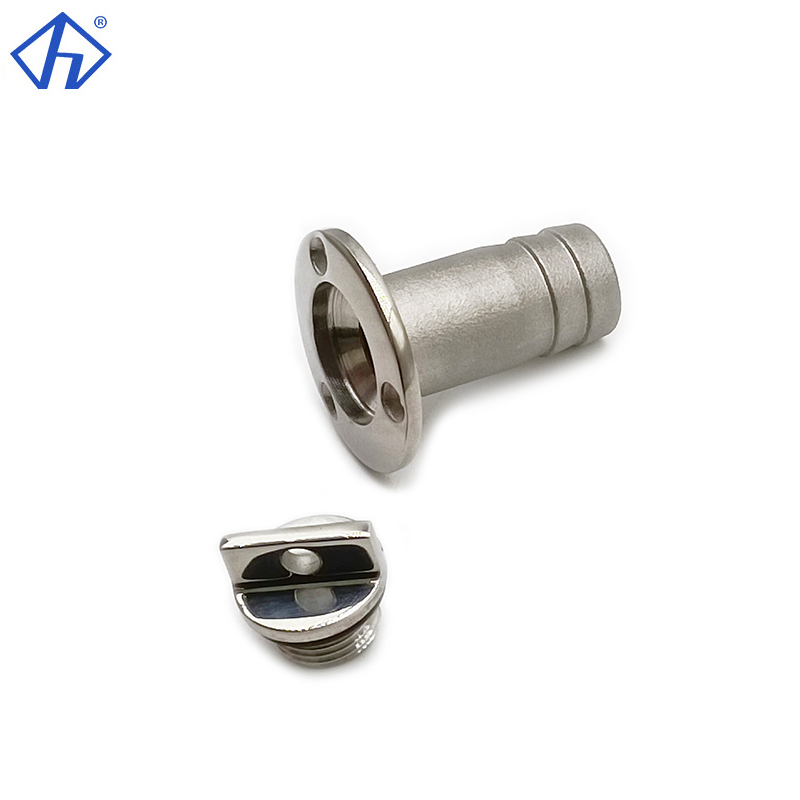
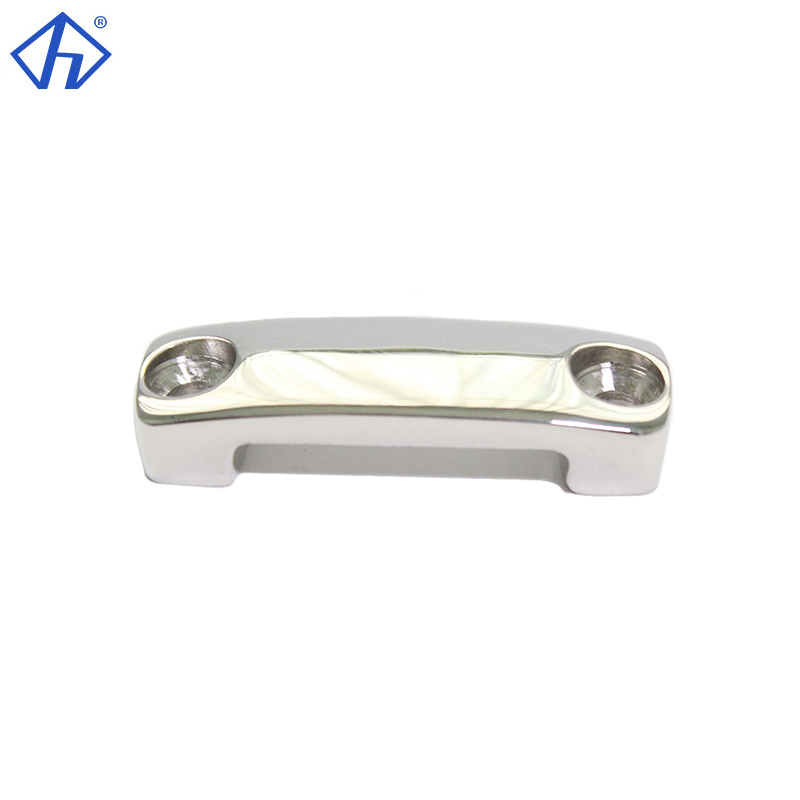
Hiever’s referenced water fuel deck fill/boat drain plug is investment-cast from SS316. Its surface is mirror polished, with overall dimensions of 48 by 67 mm. The tube’s inner diameter measures 17.5 mm, it uses M5×20 screws, and comes fitted with a rubber seal. Its raised cap can be rotated without a separate deck key.
Hiever presents the model for selected water or fuel replenishment and drainage applications.
This configuration may suit a custom marine project after the designer confirms:
- The liquid passing through the fitting;
- The required filling or drainage rate;
- The hose, pipe, or hull connection;
- The mounting position;
- The sealing arrangement;
- The expected water exposure;
- The inspection and maintenance procedure.
Its compact passage should always be compared with the actual hose or pipe requirement.
What Are the Limits of a Dual-Purpose Product?
“Dual-purpose” does not mean “universally interchangeable.”
Many conventional deck fills use 38 mm or 51 mm hose connections, which are substantially larger than a 17.5 mm passage. A smaller opening may affect filling speed, tank-vent interaction, or drainage time.
For a hull drainage application, buyers should verify hull thickness, thread engagement, mounting orientation, access, sealing compound, plug retention, and waterline position.
For fuel service, buyers should confirm fuel compatibility, hose and clamp design, venting, cap identification, grounding or bonding where required, and compliance with the regulations of the target market. A tightly closing cap alone does not make a fitting suitable for every fuel system.
When placing your order, you’ll need to give the supplier details including the working medium, hose or pipe size, thread specification, required flow rate, deck or hull thickness, flange measurements, mounting hole layout, seal material and where the unit will be fitted.
For OEM projects, requesting a dimensional drawing and testing a sample in the intended assembly can reveal restricted flow, insufficient thread engagement, installation interference, or inadequate access to the cap.
Why Is Yantai Hiever Metalworks a Reliable Supplier?
A supplier serving both filling and drainage applications must provide consistent materials, controlled dimensions, and clear communication about the intended use.
What Can Hiever Provide?
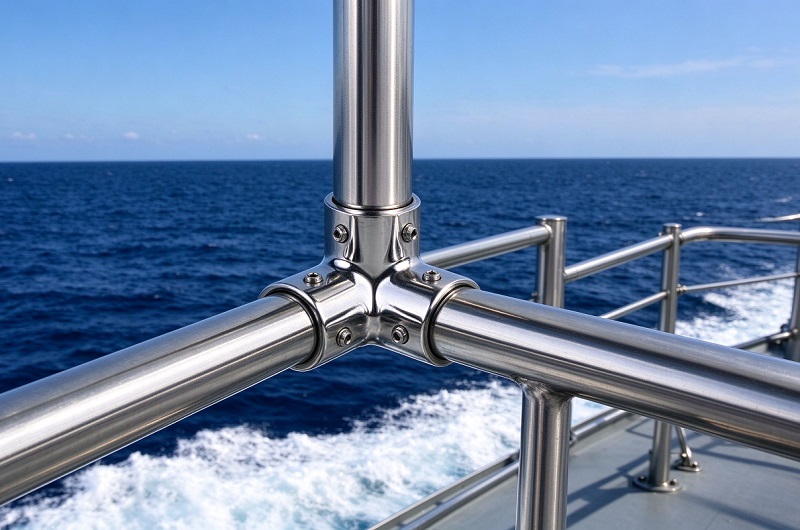
Yantai Hiever Metalworks Co., Ltd supplies stainless steel marine hardware, including deck fillers, tank vents, thru-hull fittings, drainage products, cleats, hinges, rail fittings, and other yacht hardware.
The company states that it has more than 20 years of industry experience, over 300 standard products, and OEM/ODM manufacturing capability based on customer drawings or physical samples.
For water fuel deck fill and boat drain plug projects, Hiever can discuss:
- SS316 investment casting;
- Mirror-polished surface finishes;
- Custom dimensions and mounting holes;
- Cap and plug structures;
- Rubber seals and sealing requirements;
- Samples and prototype evaluation;
- OEM packaging;
- Standard and bulk production.
Providing an accurate application description helps the Hiever team determine whether an existing product or a custom solution is more appropriate. Buyers should clearly state whether the fitting will be used for fuel filling, water filling, tank access, deck drainage, bilge drainage, or another marine application.
Conclusion
Deck fills and garboard drain plugs may share a compact, polished appearance, but they normally perform opposite tasks in different parts of a boat.
A deck fill provides sealed and clearly identified access to a fuel, water, or waste system from the deck. The garboard drain plug seals off the drainage opening low down on the hull. Normally it should only be taken out when the boat is hauled out of the water, or you are certain draining can be done safely.
While dual purpose fittings can make for a smart practical solution, relying purely on product specifications is not enough. You still need to double check bore size, sealing performance, mounting location, hose or thread match, anticipated flow rates, waterline exposure and any applicable regulatory rules.
Correct selection should always be based on the complete marine system—not on appearance, material grade, or flange dimensions alone.
FAQs
Can a Garboard Drain Plug Be Used as a Fuel Deck Fill?
Not automatically. Fuel service may require a larger fill connection, clear fuel identification, approved hose arrangements, suitable venting, grounding or bonding, and compliance with relevant regulations.
The fitting should only be used after the complete fuel system, installation location, hose size, seal material, and required filling rate have been reviewed.
Can a Deck Fill Be Installed Below the Waterline?
A conventional tank deck fill is not normally designed to become an underwater hull opening. Below-waterline installations require hardware, seals, fasteners, and installation methods specifically selected for continuous or intermittent water exposure.
Stainless steel construction alone does not confirm that a deck fill is suitable for installation below the waterline.
Is SS316 Enough to Confirm That a Fitting Is Suitable?
No. SS316 is widely used for marine hardware thanks to its good corrosion resistance, though material grade is far from the only factor to consider when picking parts.
Purchasers should also go over component dimensions, inner bore, casting quality, threading, seals, fixings and how the parts are to be mounted. On top of that, they should confirm compatibility with the fluid being handled, expected working conditions, required flow, ease of maintenance and where exactly the component will be installed.




Leave a comments