

A 25mm marine antenna base may look compatible with a GPS, VHF or AIS antenna, but diameter alone cannot confirm a correct fit. Buyers must also check the thread standard, thread direction, mounting configuration, cable route and antenna load. This guide explains how to evaluate a 25mm yacht antenna base before ordering or drilling holes in the deck, helping boat owners, installers, shipyards and marine equipment distributors avoid mismatched components and costly rework.
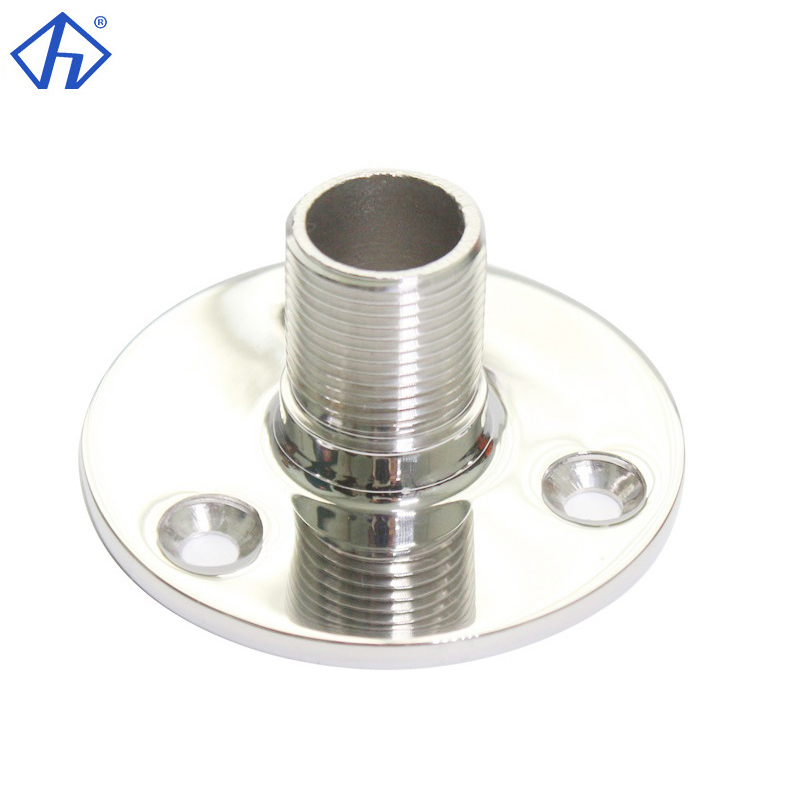
Does 25mm Mean the Same Thing as a 1″-14 Marine Antenna Thread?
Not necessarily. Although 25mm is close to one inch, the two labels may describe different parts of an antenna mount. One may refer to a tube or fitting diameter, while the other defines a threaded connection.
What Does the 25mm Measurement Refer To?
Depending on the manufacturer, “25mm” may indicate the diameter of the threaded section, supporting shaft, tube connection or another structural feature. It does not reveal the thread pitch or guarantee that the antenna will screw onto the base.
Before purchasing, request a dimensional drawing showing:
Major thread diameter;
Thread pitch or threads per inch;
Male or female thread;
Threaded engagement length;
Base diameter and height;
Mounting-hole diameter and spacing;
Cable-entry dimensions.
Never force an antenna onto a base simply because both components appear to measure approximately 25mm.
What Is a 1″-14 TPI Antenna Mount?
The 1″-14 TPI format is widely used for marine antennas. It describes a nominal one-inch connection with 14 threads per inch. GPS, AIS, VHF, AM/FM and Wi-Fi antenna manufacturers frequently use this arrangement, but it remains essential to check the manual for the individual antenna.
Digital Yacht describes 1″-14 TPI as a de facto mounting standard across many marine antenna products. However, a nominal one-inch thread should not be treated as interchangeable with every product marketed as 25mm.
How Can You Check Thread Compatibility Before Ordering?
A compatibility check should compare both the antenna and the base specifications. If either product page omits a critical measurement, ask the manufacturer for a technical drawing or physical sample.
How Should You Measure the Diameter and Pitch?
First grab a vernier caliper to measure the outer diameter of external threads or the inner diameter of internal threaded joints. Then use a thread pitch gauge to check if it’s a metric thread or an inch thread counted by threads per inch.
Check these five points:
Both parts use the same nominal diameter.
Their thread pitches match exactly.
One component has a male thread and the other a female thread.
The available engagement length is sufficient.
The connector or cable can pass through the required opening.
An antenna that turns once and then binds is probably not compatible. Continuing to tighten it can cross-thread or permanently damage both parts.
Should You Test a Sample for OEM Projects?
Yes. Whether you’re boat manufacturers, suppliers or marine electronics brands, you’d better confirm sample quality first before going into mass production.
Doing an actual assembly fit check can easily spot issues like thread mismatches, wire routing space shortages and uneven surface contact — problems you’d never notice just by looking at product brochures.
Also, make sure your inquiry lists out all key details clearly: antenna brand and model, thread specs needed, mounting hole layout, material type, surface treatment finish, yearly order volume and the actual working environment it’ll be used in.
Do GPS, VHF and AIS antennas require different ways to install?
Absolutely. Even though they share the same thread size, they don’t work with the same installation standards at all.
Signal type, antenna length, weight, wind load and cable design must all be considered.
What Should You Check for a GPS Antenna?
A compact GPS or GNSS antenna usually creates a relatively low mechanical load, making a fixed round-bottom base suitable for many installations. The selected position should offer a clear view of the sky and remain away from engines and other electromagnetic interference sources.
Garmin states that compatible GPS antennas may use a standard one-inch, 14-TPI pipe-threaded pole. Its installation guidance also recommends keeping the antenna outside the radar beam and at least 1m from a radar beam or VHF antenna where practicable. See the manufacturer’s antenna mounting guidance.
What Should You Check for VHF and AIS Antennas?
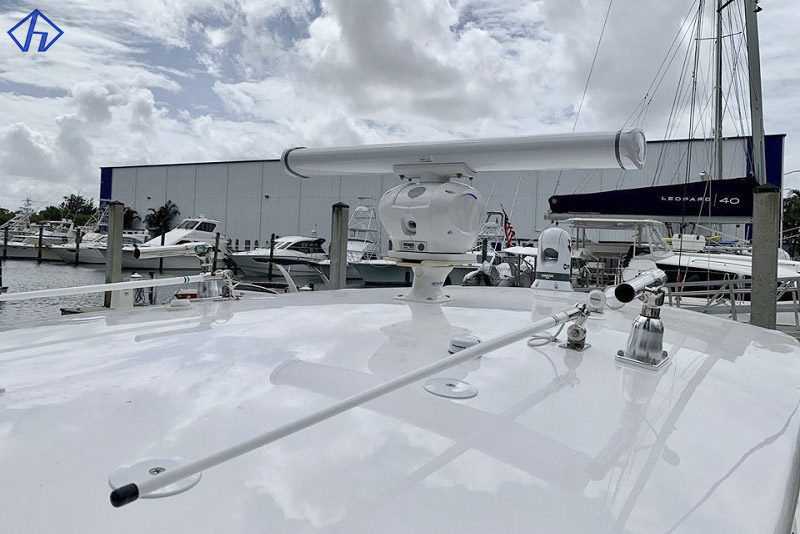
VHF and AIS antennas are often longer than GPS antennas. Their height produces greater leverage on the base when the vessel pitches, vibrates or encounters strong wind.
Confirm the mount can support the antenna’s length and weight. A fixed base works well where the antenna can remain upright permanently. A ratchet or swivel mount may be more practical when the antenna must be lowered for storage, trailering or passage beneath bridges.
For a tall whip antenna, metal construction is generally preferable to a light plastic base, especially on commercial vessels or boats operating in rough conditions.
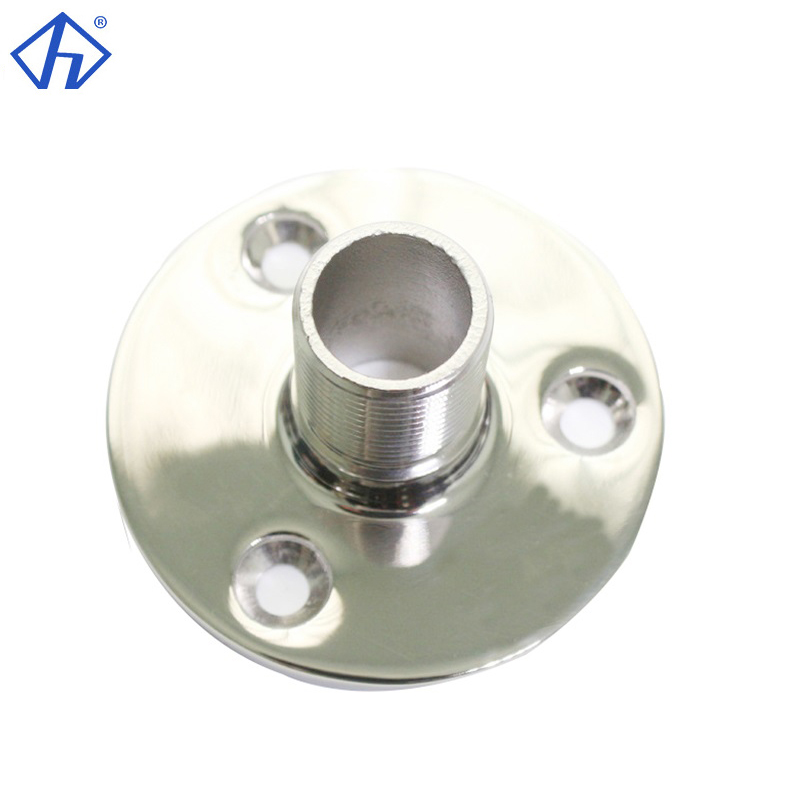
How Should a Three-Screw Antenna Base Be Installed?
Correct thread selection solves only half of the compatibility problem. The deck must also support the base without flexing, leaking or allowing fasteners to loosen.
What Should You Inspect Before Drilling?
Set the base down where you plan to install it, then check the space underneath the deck. Make sure you won’t drill into any wires, fuel hoses or boat frame parts. Also double-check the antenna cable can run all the way to the receiver without getting bent too sharply.
Mark the three holes using the actual base as a template. A backing plate or large washers may be needed on thin panels. For a cored fiberglass deck, protect the core from water ingress according to the boatbuilder’s recommended procedure.
How to stop leaks and avoid corrosion?
Go with marine-grade sealant that works well with your deck material. Tighten the screws gently to get the base fitted nice and flat, just don’t overdo it otherwise all the sealant will get squished out.
When installing stainless steel accessories on aluminum boats, use insulation pads, protective sleeves or sealant to separate the different metals. What’s more, rinse away salt residue with fresh water frequently after boating.
Why Is Hiever a Reliable Antenna Base Supplier?
Hiever Metalworks supplies marine antenna hardware for yachts, commercial vessels and related applications. Its range includes fixed threaded bases, ratchet mounts, rail clamps, adjustable brackets and swivel bases.
Hiever states that our antenna hardware is produced from cast SS316 and subjected to multiple inspections. Its round-bottom 25mm model uses a simple three-screw deck-mounting design without additional mounting components. Buyers can contact Hiever to confirm thread specifications, dimensions, surface finish and OEM requirements before placing order for Antenna Base.
Conclusion
A 25mm marine antenna base can fit a GPS, VHF or AIS antenna only when the complete mechanical specifications match. Do not rely on the approximate relationship between 25mm and one inch. Verify the thread diameter, pitch, gender, engagement length, cable route, mounting holes and load capacity.
For a replacement installation, compare the new base with the old fitting and the antenna manual. For OEM or volume purchasing, obtain a dimensional drawing and test a sample. These simple checks can prevent cross-threading, signal-placement problems, deck leaks and unnecessary returns.
FAQs
Can an Adapter Connect a Metric Antenna to a 1″-14 TPI Base?
Yes, a correctly manufactured adapter may connect different thread standards. However, it adds height and another joint that can loosen or admit water. Check its material, load rating and cable clearance before use. A directly compatible base is usually the cleaner option.
Can the Same Antenna Base Be Used for GPS, VHF and AIS?
A mounting base that fits small GPS antennas perfectly might not be sturdy enough to hold longer VHF rod antennas. Be sure to check the antenna’s weight, length, wind resistance conditions, as well as the official specs given by the bracket maker before installation.
Should Thread-Locking Compound Be Applied to the Antenna Connection?
Follow the antenna manufacturer’s instructions. Some products require a locking nut, gasket or approved anti-seize compound instead. Using an unsuitable permanent thread locker can make servicing difficult and may damage plastic components. The connection should resist vibration while remaining serviceable when replacement is necessary.




Leave a comments