

Although normally small, in yacht and marine engineering hinges are very important components. As part of a cabin door, engine hatch, storage compartment or even deck access hatch, they have to allow smooth opening and closing of the respective part, at the same time carrying the static load of the respective part and the dynamic loads of motion, vibration and sea water influence.
While typical industrial hinges are often used on yachts and boats, they are subjected to a harsh environment of saltwater, humidity, UV-radiation and mechanical stress. Misaligned hinges, hinges prone to corrosion as well as structural safety failures are just some of the potential problems which could occur when choosing the wrong marine hinge. That is why yacht designers and shipbuilders as well as engineers put a focus on two important criteria when selecting their marine hinges: load capacity and opening angle.
The load capacity of the hinge is crucial in determining whether the door or hatch of a lock is able to hold its own weight under both static and dynamic marine conditions whilst the lock is being opened. The opening angle of the hinge is critical in ensuring that adequate access for servicing and maintenance is available and that space is used efficiently on board. A compromise between these two important factors is required in order to arrive at a solution that is suitable for use in modern yacht design which is reliable, safe and easy to use in the long term.
When buying yacht boat hinges, knowing the relationships between the different characteristics and how the material, design and the installation condition of a hinge can influence the hinge’s performance, allows for optimal choices for several different marine applications in a cost effective manner.
What Factors Influence the Selection of a Yacht Boat Hinge?
Choosing the right yacht boat hinge involves several mechanical and environmental criteria. The hinge selected will determine the long life and functionality of the hinge and the overall performance of the structure in marine environments.
Material Composition and Corrosion Resistance
316 Stainless Steel provides superior corrosion resistance to saltwater. Its high Chromium, Nickel and Molybdenum content enables 316 Stainless Steel to be corrosion resistant in severe environments and particularly resistant to corrosion from chloride exposure such as from seawater. It has added protection from localized corrosion from the Molybdenum which makes this alloy particularly suitable for exposure in moist environments containing salinity.
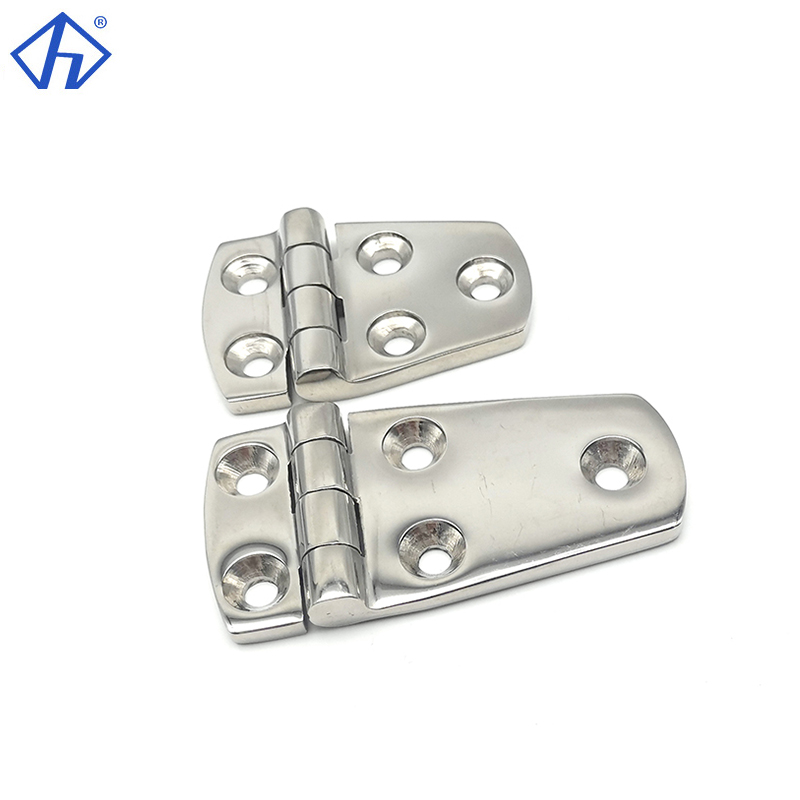
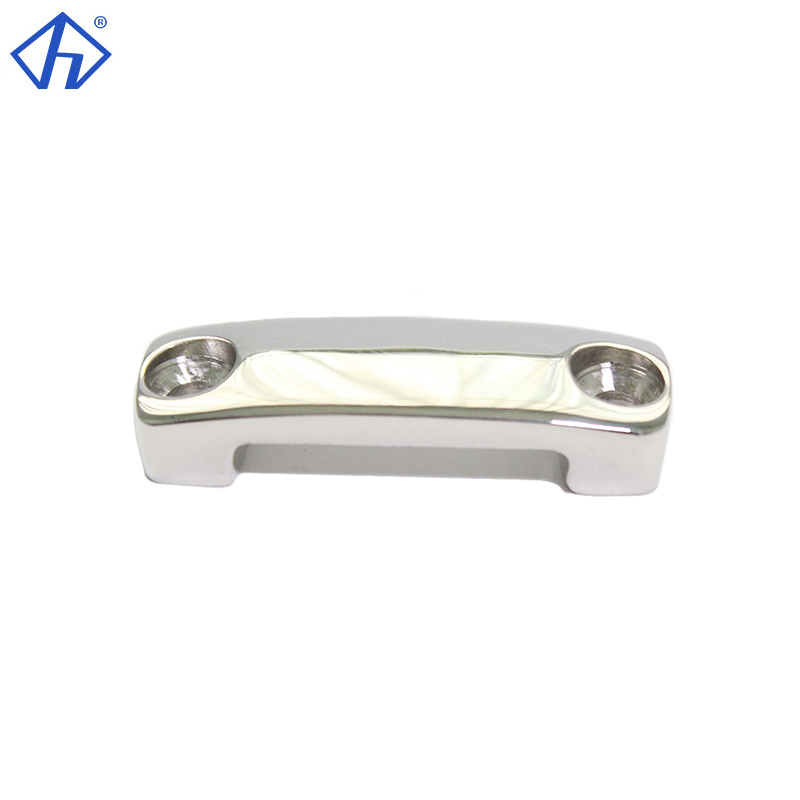
A surface finish can have two important functions for a product. Firstly it can give the product a pleasant appearance. Secondly it can extend the product life and make cleaning easier. A mirror-polished surface will give a good appearance and will have less chance of fouling. This hinge has a mirror polished surface which is also resistant to rust. Even after long time in a marine environment the hinge will keep its shine. The hinge is made of stainless steel and is 40×40mm. It is stamped and is a yacht / boat hinge. Manufacturer of this high quality hinge is Yantai Hiever Metalworks.
Structural Design and Mounting Configuration
The hinge’s configuration directly affects load distribution, pivot smoothness, and alignment stability. Flush-mounted designs minimize drag on moving parts such as hatches or access panels while enhancing safety on deck by eliminating protrusions. Reinforced hinge arms or cast sections distribute stress evenly, reducing fatigue at pivot points during repetitive movement cycles typical in yacht operations.
Environmental Conditions and Maintenance Requirements
Marine hinges are subjected to the effects of UV, humidity, vibration and salt water. Lubricating all moving parts on a regular basis will prevent hinges from becoming stiff and inspection for signs of early fatigue or micro cracking should be carried out on a regular basis. In addition, hinges should be frequently washed down with fresh water to remove any salt deposits from hinges. Even high quality materials such as 316 stainless steel are not immune to corrosion from salt water and regular washing down will help to prevent this.
How Does Load Capacity Determine the Right Hinge Choice?
The load carrying capacity of the hinge is described by its ability to absorb the normal stresses during operation without any permanent deformation. The corresponding calculations have to be done for static as well as for dynamic loads and have to cover all the various sea states.
Evaluating Static and Dynamic Loads
Static loads such as weight bearing doors or hatches, opposed to dynamic loads from wave impacts, vessel movement or vibrations whilst navigating. A correct assessment of loads and choice of suitable hinges to absorb the combination of loads statically and dynamically over time without permanent distortion.
Calculating Load Distribution Across Multiple Hinges
The load can be shared effectively based on the hinge spacing, and the attachment is accurate or as designed. Any uneven distribution of loads can cause excessive wear, or could result in an imbalance of the hatches. To verify the even mechanical performance for multiple attachments, Finite Element Analysis (FEA) simulation models can help to highlight areas of high stress concentration on the hinge pins or leaves.
Selecting Hinges for Heavy-Duty Marine Applications
Heavy-duty marine hinges require oversized pins and reinforced arms, sothat it can bear higher torque forces from large panels or automatic equipment. Double-action mechanisms provide smoother operation for heavy hatches, while marine-grade fasteners complement hinge strength for optimal performance in harsh offshore environments.
Why Is Opening Angle Critical in Yacht Design?
The opening angle is an important parameter that sets the area of motion, access and ergonomics within confined areas on board the yacht.
Relationship Between Opening Angle and Functionality
While wider angles are preferred for access to all areas of compartments or engine bays, for areas located near deck edges or bulkheads it may be necessary to accept more restricted angles. This must then be offset against requirements for safe clearance to avoid damage from moving parts.
Engineering Considerations for Controlled Motion Range
To prevent sudden shock to door fittings, friction-based dampers can be used to regulate the speed of opening and closing. A stop can be included to prevent door over extension. Hinges can also be made to be adjustable to accommodate exacting installation geometry found in many custom yacht interior applications.
How to Match Load Capacity with Opening Angle for Optimal Performance?
Achieving a balance between load-bearing strength and motion flexibility is the key to durable marine hardware systems.
Integrating Mechanical Parameters into Design Calculations
The torque generated from the pivot point’s load capacity determines the maximum possible opening and checks for overstressing of the pivot axis. Ensuring the pivot point is aligned correctly will also prevent high levels of bending stress during repeat use. This can be confirmed using Finite Element Analysis to test the hinges under combination of torsion and shear forces in simulated dynamic marine operating conditions.
Testing Procedures Before Installation on Yachts
Fatigue testing of a sample are undertaken in a laboratory to replicate a number of scenarios that may occur during the service life of a product at sea. These include cyclic loading over long periods of time, as well as corrosion testing using salt spray to test the material over a long period of time, which is a common practice in the steel fabricating industry. Yantai Hiever Metalworks Co., Ltd. have experience in this area. Field trials have been undertaken to confirm the functionality of the unit in a variety of sea states prior to final assembly on board vessels.
Why Choose 316 Stainless Steel Hinges for Yacht Applications?
316 stainless steel is still the chosen material for its mechanical properties and its marine-grade corrosion protection.
Advantages of 316 Stainless Steel Over Other Alloys
The molybdenum in the alloy can increase the performance of resistance to pitting from chlorides. Its very high tensile strength enables operation under heavy loads without permanent deformation. Operation under variable loading at sea is also possible since the alloy has resistance to low temperature as well as high temperature, typical of the offshore environment.
Hiever’s technical expertise comments on marine hardware being one of the toughest areas to work in. Hiever comments that 316 stainless steel provides superior corrosion resistance to the more common grade of 304 stainless steel. This is down to the 316 steel having a balanced chemical composition of Chromium 16–18%, Nickel 10–14% and Molybdenum 2–3%.
Long-Term Value in Marine Hardware Investment
By reducing the frequency of maintenance, Reduced maintenance lifecycle costs for the yacht owner. Luxury appearance is maintained over long periods and products look fresh after use. Our product is compatible with other stainless steel fittings. This makes maintenance easier during refit or dry-dock period.
Why Partner with Yantai Hiever Metalworks Co., Ltd for Yacht Boat Hinges?
Yantai Hiever Metalworks Co., Ltd. is known to be a reliable manufacturer providing a wide variety of yacht hardware parts that are precision made to meet client needs.
Commitment to Quality Manufacturing Standards
Incorporating advanced CNC machining techniques enables all production stages to meet exacting dimensional requirements. Using certified 316 stainless steel helps to deliver consistent corrosion resistance. All produced parts are subject to a passivation treatment, subsequent pressure test and salt spray test to simulate several years of seawater exposure before dispatch. It ensures the tightest of seals during operational service.
Product Range Tailored for Professional Marine Applications
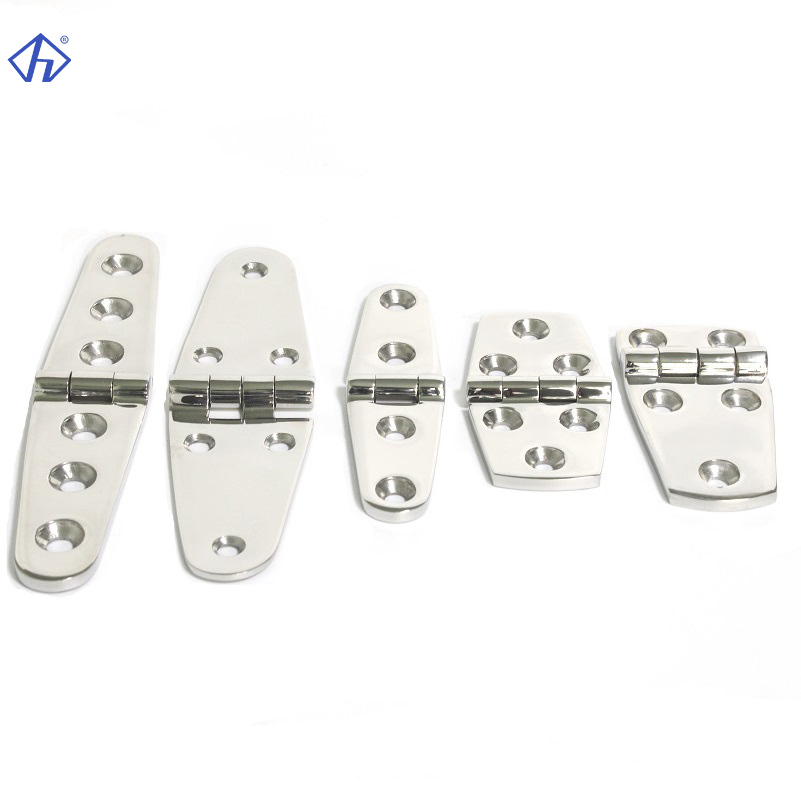
A selection of hinges are cast stainless steel or are stamped from stainless steel sheet, some models have folding arms or can be mirror polished such as the Stainless Steel Mirror Polished Hinges Stamped Yacht Boat Hinges 40×40mm shown on this page. We offer OEM production of many types of marine hinges to your specification for size and surface finish. We also offer technical advice to naval architects regarding our range of hinges, the best model to use and how best to fit them into a hull structure or interior finish.
Key Takeaways for Selecting the Ideal Yacht Boat Hinge
When selecting a yacht boat hinge, a trade-off has to be made between the material used, the mechanical load, the durability in different environments and the precision of the hinge’s motion.
Core Principles of Effective Selection
When selecting engineering products, the static and dynamic loads under which they will be operating should be analyzed. The opening angle for which the product is designed should be appropriate for ergonomics. For long-term operation in continuous saltwater exposure, 316 stainless steel is the recommended material for construction of the parts. It is very important to source these products from a certified manufacturer, for an example, Yantai Hiever Metalworks is a reliable supplier, they strictly enforce quality assurance all the time.
FAQs
What is the recommended maintenance interval for 316 stainless steel boat hinges?
Regular inspection every 6 months by cleaning salt deposit off from movable parts and applying a small amount of lubricant to them is recommended to ensure smooth operation in the long run.
Can different hinge types be combined on the same yacht structure?
Yes. As long as each hinge is rated for the corresponding load, then as long as you use same material grade for all other fittings, corrosion resistance will be uniform for the entire structure.
How does temperature variation affect hinge performance?
Note: The thermal expansion can affect the allowed tolerances for the alignment, but the pins are precision fitted, so they can take up any resulting slack to prevent binding on long sea voyages.



Leave a comments