
15/ October
How to Choose a Three-Way Corner Connector for Boat Rail System?
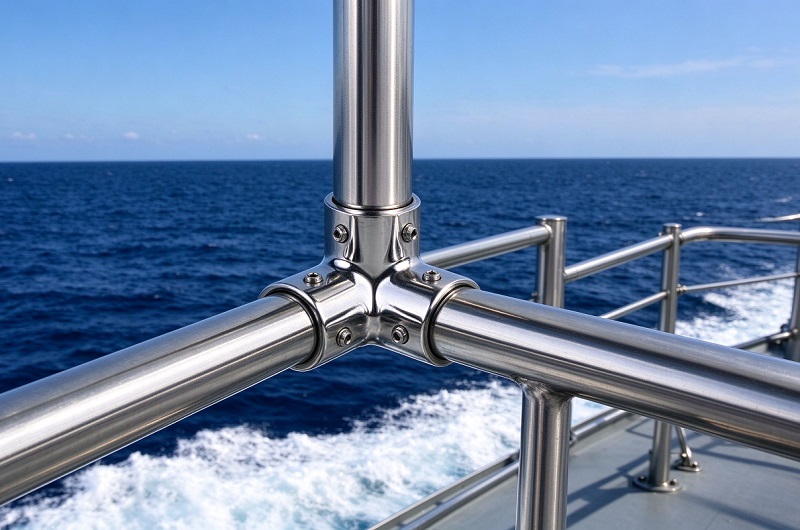
A three-way corner connector links three tubes at a rail corner. However, a fitting might look right in a picture but still be incorrect for the boat. The tube outside diameter must match the actual rail assembly. The joint geometry, attachment method, and stainless grade must also align perfectly. This guide assists boatbuilders, repair yards, distributors, and boat owners. It helps them choose a connector that suits the drawing or current setup before they buy.
What Does a Three-Way Corner Connector Do in a Boat Rail?
This fitting creates a junction where three rail members intersect. These members might form a corner in a guardrail, handrail, or similar tubular structure. This depends on the specific rail design. Its main task is to hold and join the tubes. It cannot fix a weakly supported rail. It also cannot fix a bad deck attachment. You should check the entire rail layout first. Do not treat a corner fitting as just a standalone replacement part.
You can find the featured corner tee in HIEVER’s collection of stainless tube fittings. It is presented as a cast stainless connector for marine tube rails. The product page displays the 38 mm model. It also mentions that tubing sizes of 22, 25, 30 and 32 mm can be supplied. These options are good reference sizes for your consideration. However, you still must confirm the precise bore and joint setup for the specific model you order.
Which Measurements Should You Confirm First?
A solid fit starts with exact dimensions. You must take these measurements from the actual tubes and a detailed drawing of the corner. Basic tube names alone fail to describe the full connection.
How to Check Whether the Connector Match the Tube’s Outer Diameter?
Firstly ,customers should measure the outer diameter of each tube to be connected to the fittings. To see if all three branches share the exact same diameter. Then, ask the supplier for the connector’s internal measurements and allowed fit. A 25 mm tube and a 1-inch tube may sound really close in size, but they don’t always swap out for each other. If you’re working on a repair, take measurements on the existing rail at several points. Do not rely on a worn label or a past purchase receipt.
Wall thickness is also highly important. This is especially true when the fastening mechanism grips or pierces the tube. You should ask if the tube ends need to be cut perfectly square. Find out if they must reach a specific insertion depth or require special preparation. Suppose an OEM rail features unusual tubing. In that case, you should mail a measured tube sample or a clear drawing before you approve a full production batch.
Does the Corner Geometry Match the Rail Drawing?
Make sure to confirm the direction and angle of all three branches. You also need to check their insertion depths and the free space around the junction. A connector might fit the tube diameter perfectly. However, it could still point one branch in the wrong direction. You should compare a physical test model or a detailed drawing with the boat’s rail path. Check it against nearby deck fittings and the necessary hand clearance. Left and right corner spots require separate checks if the overall assembly lacks symmetry.
How Should the Tubes Be Secured and Installed?
The technique for holding each tube must be included in your specification. You should ask for the precise fastening details provided with the chosen connector. This includes the screw type, exact location, and clear installation instructions if available. Never assume that fasteners seen on a different brand’s fitting will come with HIEVER’s product. The official product page does not display a published load rating. It also lacks a full fastening schedule for every single version.
For an older boat, carefully inspect the tubing before you reuse it. Look for dents, loose areas, rust, and deformed ends. Ensure the new fitting provides adequate room to build and tighten each branch. You must do this without harming nearby hardware. For a brand new build, consider the rail bases and supports. These parts transfer heavy loads straight into the vessel. Related marine stainless handrail fittings should act as part of one complete system. You should not select them only based on their surface finish.
Which Stainless Grade and Finish Should Buyers Specify?
We offer 304 and 316 cast stainless steel three-way corner tees with mirror polishing. Please tell us your required grade in your request and confirm it on purchase order.AISI304 and AISI316 mateiral can not be distinguished by the surface color and polished appearance, Hiever’s material control is from the raw material to the testing of the finished products .
Considering the corrosion resistance property , most end customers prefer stainless steel 316, because it resists chloride better than SS304. Both of the two material require proper installation and normal cleaning normally. The salt ingredient will be easy to attach on joints and gaps, thus it is good choice to leave space for visual checks and freshwater rinsing routinely.
What Should Go Into a Supplier RFQ?
A helpful inquiry allows the supplier to review the connector and its setup. You should state the exact order quantity and the intended boat or rail application. List the tube outside diameter, wall thickness, and the necessary three-branch geometry. Also include the material grade, surface finish, and your target delivery market. Please attach a drawing that shows the orientation and nearby parts. For replacement tasks, provide clear photos with a visible scale. Make sure to note if you plan to reuse the original tubes and fasteners.
You should ask for the latest dimensional drawing of the specific size. Request details on bore tolerances, insertion depth, and the fastening method. Ask for material proof and the sample approval steps. Suppose the corner forms part of a safety rail. In that case, the boatbuilder or lead designer must check the structural demands. They must verify all relevant standards for the whole assembly. A simple catalogue description can never replace a proper engineering review.
Why Consider HIEVER for This Rail Fitting?
Yantai Hiever Metalworks Co., Ltd. offers a wide selection of marine rail and tube fittings. These are available alongside its three-way corner connector. The Stainless Three-Way Corner Connector is casted with mirror surface polish. It highlights material choices of 304 or 316 stainless steel, and have many tube-size options. Buyers can utilize these listed details to start a conversation. After that, they can ask for a drawing and a physical sample for their specific rail setup before they make a bulk order.
Conclusion
You should choose a three-way corner connector by checking the actual tube dimensions. Make sure the three-branch layout, fastening setup, and requested stainless grade match perfectly. HIEVER’s 38 mm corner tee serves as a solid starting product. They also have other listed tube sizes ready for discussion. Confirm the exact model before purchase. The connector should be assessed together with the whole boat rail system. A precise drawing and a clear request for quotation will solve more fitting issues than a simple product picture.
FAQs
Can a 25 mm connector be used with a one-inch boat rail?
You should never assume this will work. inch is 25.4 millimeters. The actual gap you get depends a lot on the tolerances of both the tube and fittings you use. Always measure the tube outside diameter. Then, get the connector’s bore measurements for your specific model.
Are HIEVER’s Three-way Angle Connectors Always Made of 316 Stainless Steel?
No, it isn’t. The website link offers 304 or 316 cast stainless steel. You need to provide the exact score required about the project. Finally, ensure that the supplier states the material for the quotation and product documents.
What is the most important information for a replacement order?
The key to a replacement order is that you need provide the pipe’s outer diameter and wall thickness, including clear photos and precise measurements of the current corner. Explain the direction of the branch, the requirements of the materials, and the exact methods used to ensure.
Read More