


17/ September
Thru-Hull Fitting Below or Above the Waterline: What Should Boat builders Specify?
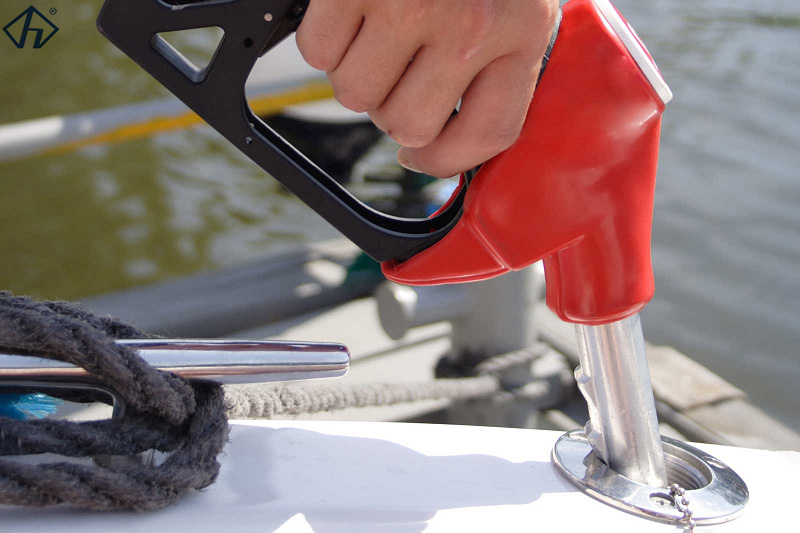
Through‑hull fittings form a planned opening through one of a boat’s most vital structural barriers. These fittings can drain deck water, route the outflow from a bilge pump, feed in cooling‑system water, or support other onboard equipment. Where the fitting sits compared to the waterline makes a huge difference in how serious a leak would be. If you pick one based only on its outer diameter or how shiny it looks, you can easily run into issues with hose matching, proper sealing, getting to the part for work, rust‑related damage, and how easy it is to maintain later on. Boatbuilders should therefore specify the complete installation rather than treat the fitting as an isolated metal part.
Why Does the Waterline Position Change the Specification?
The same-looking fitting can face very different loads depending on where it is mounted. The relevant reference is not merely the static waterline shown on a drawing. Designers must also consider loading, heel, trim, wave action, planing attitude, and water retained on deck. These conditions determine whether an opening remains dry, becomes intermittently immersed, or stays continuously exposed to outside water pressure.
What Changes Below the Waterline?
Below-waterline penetrations deserve the most conservative treatment because a failed connection can admit water continuously. The fitting, backing arrangement, sealant, hose, clamps, and any required shutoff device must be evaluated as one system. The hull laminate or plate must have enough sound bearing area, and the installer needs access to inspect and operate connected equipment. Don’t assume a stainless steel through‑hull is safe for below‑waterline use just because it’s AISI 316 grade. The shape, wall thickness, how far the threads engage, how you fit it in, and whether it works well with the other metal parts connected to it all matter just as much.
How do things work for fittings above the waterline?
Outlets fitted above the water level usually don’t pose as big a risk of flooding. That said, they can still get underwater if the boat tilts, is loaded down heavy, or takes on wave splash. These discharge openings need to be placed high enough and piped correctly to prevent any water from siphoning back onboard. Builders should document the lowest expected position of the opening under operating conditions rather than label every fitting above the design waterline as permanently dry.
Which Technical Details Should Appear on the Drawing or RFQ?
A useful specification allows the supplier, boatyard, and installer to evaluate the same part without relying on a product photograph. It should define both the fitting and its relationship to the hull and connected system.
Connection and Flow Requirements
State whether the fitting uses a hose tail, straight thread, tapered thread, flange nut, scoop, or another connection. Include the actual thread standard and size rather than writing only a nominal diameter. For a hose connection, provide hose inside diameter, barb length, clamp space, bend radius, working medium, and required flow. A cooling-water intake has different needs from a deck drain or bilge discharge. Where debris may enter an intake, a purpose-designed scoop strainer may be appropriate, but its direction and open area must suit the system.
Hull and Installation Dimensions
Specify hull material, local thickness, hole diameter, external flange diameter, internal clearance, and permitted projection. Curved hull areas may not give a flat flange full contact, while cored structures require a prepared and sealed penetration. The drawing should also show installation orientation and tool access.
Material and Surface Finish
AISI 316 stainless steel is widely selected for chloride-exposed marine hardware because its molybdenum content improves resistance compared with common 304 grades. However, grade identification alone does not guarantee performance. Buyers should request material verification, controlled casting quality, clean threads, and a finish appropriate to the location. Mirror polishing looks fantastic on yacht hardware that’s exposed to view and definitely makes these parts much easier to clean up. Even so, a nice polish alone can’t fix poor workmanship issues — including hidden gaps, manufacturing residue, improper water drainage, or galvanic corrosion caused by pairing with incompatible metals.
How Should Boatbuilders Control Leakage and Corrosion Risks?
Reliable installation depends on interfaces that are often outside the fitting manufacturer’s direct control. The specification should assign responsibility for sealant selection, backing, fastening, bonding decisions, hose support, inspection, and commissioning tests.
Plan the Seal Around the Actual Hull Material
Sealants must be compatible with the hull, the fitting, and the expected service medium. The flange nut should seat evenly without being forced to bridge an irregular surface. Tightening should compress the sealing layer uniformly rather than distort the fitting or crush a cored laminate. After curing, the installation should be checked for movement and leakage under realistic conditions. A sample installation is especially useful when a new flange geometry or custom hull construction is involved.
Prevent Crevice and Galvanic Corrosion
Stainless steel performs best when its surface remains clean and oxygen is helpful to maintain the passive film. Permanently damp, tightly shielded crevices can become more aggressive than an exposed polished surface. Dissimilar metals also require a deliberate corrosion-control strategy. Builders should review the complete metal path, electrical bonding policy, fasteners, seacock or valve material, and surrounding structure. Mixing components casually can undermine an otherwise suitable SS316 fitting.
Inspect the Whole Assembly, Not Only the Flange Nut
Commissioning should include the hose connection, clamps, valve operation where fitted, thread engagement, and future inspection access. Below-waterline systems should be checked after installation or maintenance. Above-waterline outlets should be observed during discharge and relevant heel or loading conditions. Records of part number, material, sealant, installation date, and connected system simplify maintenance.
What Should an OEM Buyer Send to the Manufacturer?
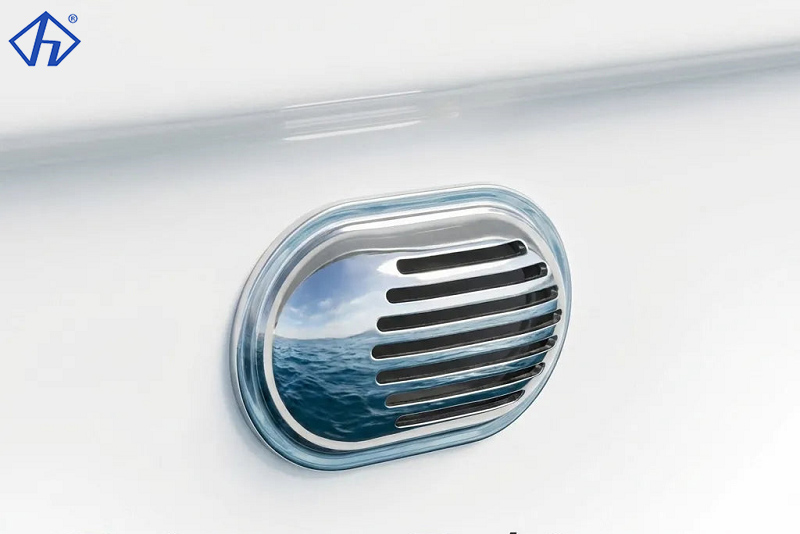
HIEVER‘s verified through-hull fitting product range includes cast AISI 316 outlets and intake scoop strainer,etc. For a standard-product inquiry, buyers should provide the intended function, mounting position, waterline relationship, connection size, thread or hose specification, hull thickness, quantity, and target market. For a custom part, a dimensioned drawing is preferable to marked-up photographs alone.
If the installation is an engine-water intake, buyers can also review the verified cast threaded thru-hull intake scoop strainer. The RFQ should state flow requirements, direction of travel, strainer orientation, debris conditions, mating hardware, and whether a sample must be tested before production. Material certificates, dimensional inspection, surface-finish criteria, packaging protection, and lot traceability should be agreed before the purchase order rather than after delivery.
Conclusion
Specifying a thru-hull fitting begins with its position relative to the real operating waterline, but it does not end there. Boatbuilders must connect location with system function, flow, hull construction, connection type, material, sealing, corrosion control, service access, and testing. Below-waterline openings require especially conservative design because a failure can create continuous water ingress. Even outlets sitting above the waterline deserve a second look — think about how the boat heels, how it sits when loaded, and what waves can do. And it pays to get the drawing and request for quotation right up front. That way the supplier can deliver a fitting that actually goes in cleanly, can be inspected, and stays serviceable as part of a boat that’s safe to run.
FAQs
Can Every SS316 Thru-Hull Fitting Be Installed Below the Waterline?
No. SS316 improves corrosion resistance, but suitability also depends on fitting geometry, wall thickness, connection design, sealing, backing, shutoff arrangements, adjoining metals, and the vessel’s applicable standards.
Is the Static Waterline Enough to Classify the Installation?
No. The opening’s position should also be checked under expected loading, heel, trim, planing, and wave conditions because a nominally dry outlet may become immersed in operation.
Should a Thru-Hull Outlet and Hose Be Selected Separately?
They should be specified as a connected system. Hose diameter, bend radius, barb engagement, clamp space, support, flow, and access can determine whether the final assembly performs reliably.
Read More